
Most people expect shortness of breath to happen during exercise or physical activity. However, if you notice that breathing becomes harder when you lie flat in bed, it can feel especially alarming. Many patients describe needing extra pillows to sleep comfortably or waking up suddenly at night feeling like they cannot catch their breath.
This symptom is medically known as orthopnea, and in some cases, it may signal an underlying heart condition such as heart failure. While not every episode of breathlessness is heart-related, persistent shortness of breath when lying down should never be ignored.
If you are experiencing ongoing breathing discomfort, the team at Apex Heart & Vascular Center can help. Call (832) 305-5977 to schedule an evaluation in Houston, Tomball, or Cypress.
What Is Shortness of Breath When Lying Down?
Shortness of breath when lying flat occurs when breathing becomes uncomfortable in a horizontal position but improves after sitting upright. Many patients first notice that they cannot lie flat without feeling breathless and begin using extra pillows or sleeping in a recliner for relief. This symptom, known as orthopnea, often develops gradually and may worsen over time if the underlying cause is not addressed.
People experiencing orthopnea commonly report difficulty taking a full, deep breath while lying down. In addition, some wake up suddenly at night gasping for air, only to feel better once they sit upright. Others find they need two or three pillows to sleep comfortably. Because this pattern is so characteristic, doctors frequently ask how many pillows a patient uses at night. The answer can provide important clues about heart function and possible fluid buildup.
Why Breathing Changes When You Lie Flat
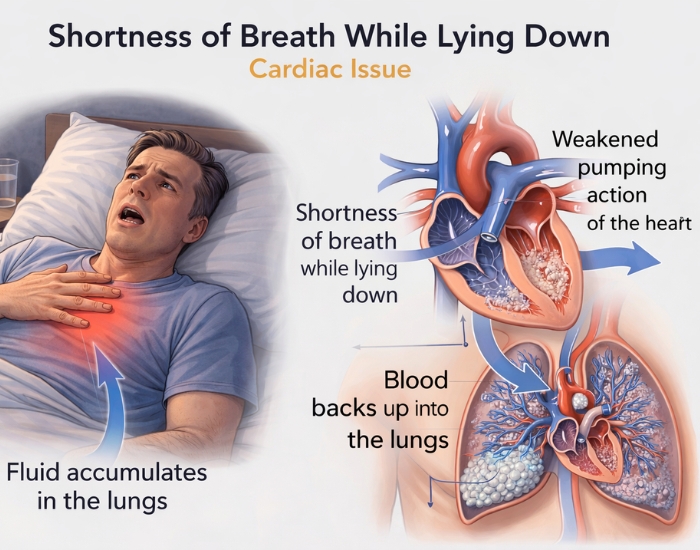
When you lie down, gravity no longer pulls fluid toward your legs. Instead, fluid that has accumulated in the lower extremities during the day shifts back toward the chest. In healthy individuals, the heart and lungs easily adjust to this normal redistribution of fluid.
However, if the heart is weakened or not pumping efficiently, it may struggle to manage the increased blood volume returning to it. As pressure rises inside the heart, fluid can back up into the lungs. This buildup increases pressure in lung tissue and makes oxygen exchange more difficult, leading to shortness of breath. Once you sit upright, gravity helps move fluid away from the lungs, which is why breathing often improves within minutes.
The Connection Between Orthopnea and Heart Failure
One of the most common causes of orthopnea is heart failure.
Heart failure occurs when the heart cannot pump blood efficiently enough to meet the body’s needs. When this happens, blood can back up into the lungs, leading to fluid buildup—a condition known as pulmonary edema.
As fluid accumulates in the lungs, oxygen exchange becomes less efficient, making breathing more difficult. Lying flat increases blood return to the heart and lungs, which can worsen symptoms in someone with heart failure.
Because heart failure is a serious condition, patients experiencing orthopnea should seek evaluation from a cardiologist in Houston who can assess overall cardiovascular health.
Symptoms That Often Accompany Orthopnea
Shortness of breath while lying down rarely occurs by itself. In many cases, patients with heart-related breathing problems notice additional symptoms that develop gradually over time. For example, some individuals experience sudden nighttime episodes of severe breathlessness, known as paroxysmal nocturnal dyspnea. These episodes may cause a person to wake up abruptly, feeling as though they are suffocating, and they often improve after sitting upright for several minutes.
In addition, persistent fatigue or generalized weakness is common because the heart may not be circulating oxygen-rich blood efficiently throughout the body. Many patients also develop swelling in the legs, ankles, or feet due to fluid retention. Others report a rapid or irregular heartbeat, sometimes described as palpitations. A chronic cough, particularly one that worsens at night, may also occur as fluid accumulates in the lungs. Recognizing these accompanying symptoms early allows physicians to evaluate heart function promptly and diagnose underlying conditions before serious complications develop.
Other Causes of Shortness of Breath While Lying Down
Although heart failure is one of the most important causes of orthopnea, it is not the only explanation. Several other medical conditions can also trigger breathing difficulty in a flat position. For instance, asthma or chronic lung diseases may worsen at night due to airway inflammation. Pneumonia can interfere with oxygen exchange and lead to discomfort when lying down.
In some cases, obesity contributes to breathing problems because excess weight places pressure on the diaphragm and lungs when a person lies flat. Obstructive sleep apnea can also disrupt breathing repeatedly during sleep, causing nighttime breathlessness. Additionally, anxiety or panic disorders may create a sensation of air hunger, even when oxygen levels are normal. Fluid retention related to kidney disease can further increase pressure in the lungs and worsen symptoms.
Because these conditions can produce similar warning signs, a thorough medical evaluation is essential. Identifying the exact cause ensures that patients receive appropriate treatment and avoid unnecessary complications.
Risk Factors for Heart-Related Breathing Problems
Certain health conditions increase the likelihood that shortness of breath may be linked to heart disease. These include:
- High blood pressure
- Coronary artery disease
- Diabetes
- High cholesterol
- Obesity
- Smoking
- Family history of heart disease
- Older age
If you have these risk factors and develop breathing difficulty while lying down, professional evaluation is especially important.
When to Seek Medical Attention
You should schedule a medical appointment if you experience:
- Persistent shortness of breath when lying flat
- Nighttime episodes of gasping for air
- Swelling in your legs or ankles
- Fatigue that limits daily activities
Seek immediate medical care if shortness of breath occurs alongside chest discomfort. In some cases, doctors may evaluate whether chest pain treatment or emergency cardiac care is necessary.
How Doctors Diagnose Heart-Related Breathing Issues
At Apex Heart & Vascular Center, evaluation begins with a detailed medical history and physical examination. Your provider will assess:
- Symptom patterns
- Medical conditions
- Lifestyle habits
- Family history
Doctors listen carefully to heart and lung sounds and may check oxygen levels and blood pressure.
Tests Used to Evaluate Heart Function
If heart disease is suspected, advanced testing may be recommended.
An echocardiogram test uses ultrasound imaging to evaluate the heart’s pumping strength, valve function, and chamber size. It is one of the most important tools for diagnosing heart failure.
A nuclear stress test measures blood flow to the heart during physical exertion or medication-induced stress. This test helps detect blocked coronary arteries and areas of reduced blood supply.
These diagnostic tools allow physicians to identify whether cardiovascular disease is contributing to breathing symptoms and guide appropriate treatment.
Treatment Options for Heart-Related Shortness of Breath
Treatment depends on the underlying cause and the severity of the condition. When heart failure contributes to breathing difficulty, doctors typically recommend a combination of medications, lifestyle changes, and symptom management strategies.
Medications
If heart failure is diagnosed, physicians may prescribe diuretics to reduce excess fluid buildup and relieve lung congestion. They may also recommend ACE inhibitors or ARBs to improve heart function and beta blockers to reduce the heart’s workload. In addition, blood pressure medications help stabilize circulation and decrease strain on the heart. Together, these treatments improve blood flow, lower pressure in the lungs, and make breathing easier.
Fluid Management
In many cases, doctors advise patients to limit sodium intake to prevent fluid retention. Monitoring daily weight is also important, as sudden weight gain can signal fluid buildup before symptoms worsen. By managing fluid levels carefully, patients can reduce nighttime breathing discomfort.
Lifestyle Changes
Long-term heart health requires active lifestyle adjustments. Following a heart-healthy diet, exercising regularly, maintaining a healthy weight, quitting smoking, and controlling blood pressure and cholesterol all play essential roles in improving symptoms and preventing progression.
Sleeping Position Adjustments
Simple positioning strategies can also provide relief. Elevating the head of the bed, using supportive pillows, or sleeping in an adjustable bed may reduce fluid pressure in the lungs and improve nighttime breathing comfort. While these adjustments do not treat the underlying condition, they can significantly improve sleep quality and overall comfort.
When to See a Heart Specialist
Persistent breathing problems should never be dismissed, especially when they occur at rest or while lying flat.
A qualified heart specialist Houston patients trust can perform comprehensive testing and determine whether heart failure or another cardiovascular condition is responsible.
Early diagnosis significantly improves treatment outcomes and helps prevent complications.
Don’t Ignore Breathing Changes — Get Expert Heart Care
Shortness of breath when lying down can be unsettling, but it may also serve as an important early warning sign. Identifying the cause quickly allows patients to begin treatment before symptoms worsen. If you are experiencing breathing difficulty at night or need multiple pillows to sleep comfortably, Apex Heart & Vascular Center is here to help.
We proudly serve patients in Houston, Tomball, and Cypress with comprehensive, evidence-based cardiovascular care. Call (832) 3055977 or book online to schedule your appointment today.
At Apex Heart & Vascular Center, patients receive expert care from Yasir Akram, MD, MPH, FACC, FSCAI, an accomplished interventional and general cardiologist with extensive expertise in heart failure management, advanced cardiac imaging, and complex cardiovascular procedures. Dr. Akram is board-certified in Echocardiography, Nuclear Cardiology, and Vascular Ultrasound (RPVI) and holds fellowship status with the American College of Cardiology. His training in preventive medicine and cardiovascular intervention enables him to provide comprehensive, patient-centered care focused on both treatment and long-term heart health.
Medical Disclaimer: This article is for educational purposes only and does not replace professional medical advice, diagnosis, or treatment. If you are experiencing severe shortness of breath, chest pain, or other urgent symptoms, seek immediate medical care. Always consult a qualified healthcare provider regarding concerns about heart or lung health.