

Feeling your heart suddenly race, flutter, pound, or skip can be surprisingly unsettling. Maybe it happens while you are sitting quietly at home. Maybe you notice it after climbing stairs, drinking a caffeinated beverage, or during a stressful moment. Sometimes the sensation lasts only a few seconds. Other times, it continues long enough to make you wonder whether something is wrong with your heart.
One question that often comes up is: “Does having heart palpitations mean I have AFib?” Not necessarily. Heart palpitations and atrial fibrillation, or AFib, are closely related but fundamentally different. Palpitations describe what you feel. AFib describes a specific abnormal electrical rhythm in the heart.
That distinction is important because many different things can cause palpitations, while AFib is a particular type of arrhythmia that may require medical evaluation and treatment. Some people with AFib experience obvious palpitations, while others have fatigue, dizziness, shortness of breath, or no noticeable symptoms at all.
Important Note: You cannot reliably diagnose AFib based on how your heartbeat feels. A fast, fluttering, or irregular heartbeat can have many possible causes. If palpitations are new, recurring, prolonged, or accompanied by concerning symptoms, a medical evaluation can help determine the cause.
What Is the Difference Between AFib and Heart Palpitations?
The simplest way to understand the difference is this: heart palpitations are a symptom, while AFib is a heart rhythm disorder.
When you experience palpitations, you become unusually aware of your heartbeat. Your heart may feel as though it is racing, pounding, fluttering, skipping, or beating harder than normal. The sensation itself does not tell you exactly what rhythm your heart is producing.
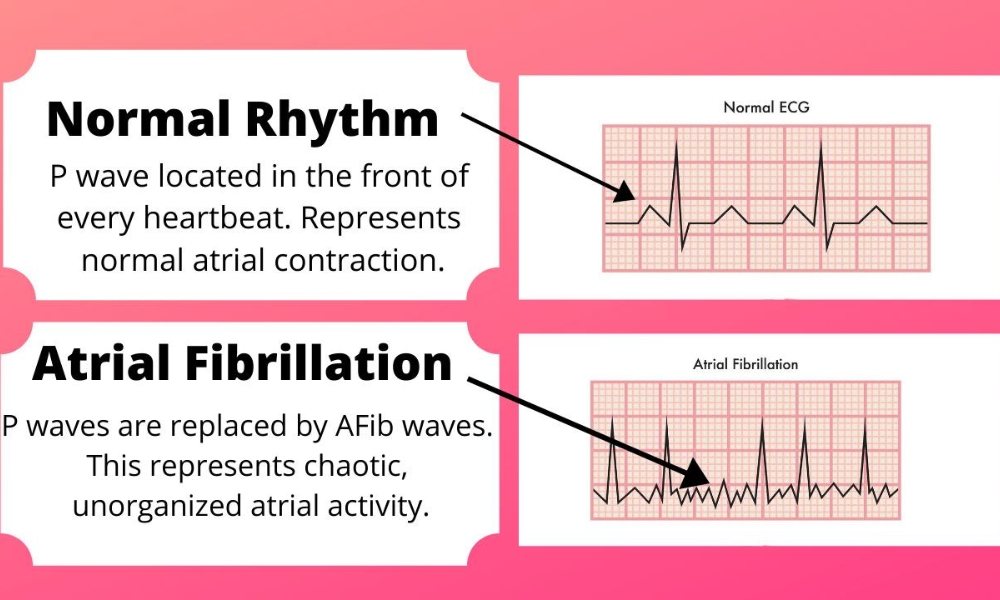
AFib, on the other hand, is a specific type of arrhythmia. During AFib, the electrical activity in the upper chambers of the heart becomes disorganized, causing the atria to beat irregularly instead of contracting in their usual coordinated pattern.
That means a person can have palpitations without having AFib. At the same time, a person can have AFib and feel palpitations. Some people with AFib may not feel anything unusual at all.
Think of it this way: palpitations are your body’s perception of an unusual heartbeat; AFib is one possible medical explanation for that unusual rhythm.
This distinction is especially important when symptoms keep returning. Rather than assuming that the sensation is caused by stress or, on the other hand, immediately assuming it is AFib, the goal is to identify what the heart is actually doing.
What Are Heart Palpitations?
Heart palpitations are the sensation of feeling your own heartbeat more strongly, quickly, or irregularly than usual. People describe them in different ways because the experience can vary considerably from one person to another.
You might describe a palpitation as:
- A racing heartbeat
- A pounding sensation in the chest
- A fluttering feeling
- A skipped beat
- A pause followed by a stronger beat
- A heartbeat that suddenly feels very noticeable
- A rapid or irregular pulse
Sometimes the sensation is felt mainly in the chest. Some people notice it in the throat or neck as well. A person may become especially aware of their heartbeat when lying quietly in bed because there are fewer distractions.
Palpitations can occur when the heart rhythm is completely normal. For example, your heart naturally beats faster during exercise because your body needs more blood and oxygen. You may also become more aware of your heartbeat during an emotionally intense situation.
Other palpitations are caused by premature or extra beats, changes in heart rhythm, medications, stimulants, dehydration, or an underlying medical condition. Because the sensation has so many possible explanations, the word “palpitations” by itself does not identify the cause.
If you regularly experience unexplained palpitations, Apex Heart & Vascular Center provides evaluation for heart palpitations and other cardiovascular symptoms.
What Is Atrial Fibrillation?
Atrial fibrillation, commonly called AFib, is an irregular heart rhythm that begins in the heart’s upper chambers. Normally, electrical signals coordinate the heartbeat so the atria and ventricles work together in an organized sequence.
During AFib, the electrical signals in the atria become disorganized. Instead of contracting in a normal rhythm, the atria quiver or beat chaotically. The lower chambers still pump blood, but the overall heartbeat becomes irregular.
AFib is one of the most common types of arrhythmia. It may occur in episodes that stop on their own, or it can persist and require treatment. Some people notice the change immediately, while others discover AFib during a routine examination or heart test.
AFib is important to identify because it is associated with an increased risk of blood clots and stroke in some patients. It can also occur alongside other cardiovascular conditions, including high blood pressure, coronary artery disease, valve disease, and heart failure.
That is why recognizing possible symptoms is useful, but confirming the rhythm is even more important.
Learn more about heart disease and cardiovascular conditions evaluated by Apex Heart & Vascular Center.
Do AFib and Palpitations Feel Different?
Sometimes they do, but there is no single sensation that reliably separates AFib from other causes of palpitations.
People with AFib may describe their heartbeat as irregular, fluttering, racing, pounding, or chaotic. One person might say, “My heart feels like it is jumping around.” Another may simply notice that their pulse does not seem steady.
However, another person with a different rhythm problem may describe almost exactly the same sensation.
This is why trying to identify AFib based only on the feeling in your chest can be misleading. The heart’s electrical activity needs to be evaluated to determine what rhythm is actually occurring.
What AFib Palpitations May Feel Like
During an AFib episode, you may notice that the heartbeat feels both fast and irregular. Instead of a predictable “lub-dub” pattern, the beats may seem uneven or constantly changing.
You may also notice other symptoms at the same time, including shortness of breath, fatigue, weakness, dizziness, lightheadedness, or reduced exercise tolerance.
Some episodes are obvious. Others are surprisingly subtle.
What Ordinary Palpitations May Feel Like
Palpitations caused by a premature beat may feel very different. You might feel a brief pause or a sensation that your heart “skipped,” followed by a stronger beat. The episode may last only seconds.
Palpitations can also happen because your heart rate temporarily increases in response to exercise, stress, fever, dehydration, or another trigger. In these situations, the sensation may resolve once the underlying trigger settles.
That does not mean every short episode is harmless, however. The pattern, frequency, associated symptoms, medical history, and actual heart rhythm all matter.
What Causes Heart Palpitations?
Palpitations have a surprisingly broad range of possible causes. Some are temporary and relatively benign, while others involve an underlying heart rhythm problem or another medical condition.
Common triggers can include physical activity, emotional stress, lack of sleep, dehydration, fever, and certain stimulants. Some medications and over-the-counter products can also affect heart rate or rhythm.
Caffeine may make some people more aware of their heartbeat, although individual responses vary. Stress and anxiety can also produce a pounding or racing sensation without necessarily causing AFib.
Palpitations can also occur with abnormal heart rhythms. These may include premature beats, tachycardia, atrial flutter, AFib, or other arrhythmias.
Medical conditions outside the heart can contribute as well. Thyroid disorders, electrolyte abnormalities, anemia, and other systemic problems may affect how the heart beats or how strongly you perceive it.
That is why the most useful question is not simply, “Are these palpitations?” You already know they are a sensation. The more important question is, “What is causing them?”
Can Stress Cause Palpitations?
Yes. Strong emotions can activate the body’s stress response and make your heart beat faster or more forcefully. You may notice pounding in your chest during an argument, before an important event, after frightening news, or during a particularly stressful period.
Stress can also make you pay closer attention to normal changes in your heartbeat. A person who would ordinarily ignore a slightly stronger heartbeat may notice it immediately when feeling anxious.
However, recurring palpitations should not automatically be attributed to stress. If the episodes are new, increasingly frequent, prolonged, or associated with dizziness, chest discomfort, fainting, or breathing difficulty, they deserve medical evaluation.
Can Caffeine or Dehydration Cause Palpitations?
They can contribute to palpitations in some people. Dehydration can affect the body’s fluid and electrolyte balance, while stimulants can influence heart rate and how strongly you perceive your heartbeat.
If you repeatedly notice symptoms after a particular drink, medication, illness, or activity, make a note of the pattern and discuss it with your healthcare professional rather than assuming you have identified the cause.
Important Note: A trigger can explain when palpitations happen without proving what heart rhythm is occurring. Even if an episode seems related to stress, caffeine, exercise, or dehydration, recurring symptoms may still need evaluation.
What Symptoms Can AFib Cause?
AFib can cause palpitations, but that is only one possible symptom. Some people experience several symptoms at once, while others notice only one or have no symptoms at all.
Possible symptoms include:
- Irregular or rapid heartbeat
- Fluttering or pounding in the chest
- Shortness of breath
- Dizziness or lightheadedness
- Fatigue or unusual tiredness
- Weakness
- Reduced ability to exercise
- Chest discomfort
- Fainting or near-fainting in some cases
Fatigue can be particularly easy to overlook. Someone may not feel a dramatic racing heartbeat but may notice that they become tired much sooner than they normally would. Another person may primarily experience shortness of breath when walking or exercising.
AFib can also occur without noticeable symptoms. This is one reason an abnormal rhythm may sometimes be discovered unexpectedly during an EKG or another heart examination.
If you are experiencing symptoms such as shortness of breath, dizziness, or unexplained fatigue together with palpitations, a cardiovascular evaluation may help determine whether an abnormal rhythm is involved.
Does an Irregular Heartbeat Always Mean AFib?
No. An irregular heartbeat does not automatically mean AFib.
There are multiple types of arrhythmias, and some irregular or unusual beats are relatively common. Premature beats, for example, can create the sensation of a skipped beat or a pause followed by a stronger heartbeat.
Other rhythm disorders can cause a heart rate that is very fast, very slow, or irregular. Atrial flutter is another abnormal rhythm that begins in the atria but has a different electrical pattern from AFib.
Even normal changes in heart rate can feel unusual when you suddenly become aware of them. During exercise, for example, the heart is expected to beat faster. During rest or sleep, the rate normally slows.
The important distinction is between feeling that something is unusual and identifying the actual rhythm responsible. An EKG or longer-term heart monitor can provide information that a person’s sensation alone cannot.
For people with recurring symptoms, documenting when the episodes happen and what they feel like can help a healthcare professional decide whether additional testing is appropriate.
Recurring Heart Palpitations Should Not Be Ignored
If your heartbeat repeatedly feels racing, fluttering, pounding, or irregular without an obvious explanation, a cardiovascular evaluation can help determine whether the cause is AFib or another rhythm problem.
When Should You Worry About Heart Palpitations?
Occasional palpitations can happen for many reasons, and not every unusual heartbeat indicates a serious problem. What matters is the pattern and what happens alongside the palpitations.
It is especially important to seek medical attention when palpitations are new, frequent, prolonged, or occurring with other symptoms. A person who has never experienced an irregular heartbeat before should not assume that a new pattern is simply stress or caffeine.
Pay particular attention if palpitations occur together with chest discomfort, significant shortness of breath, dizziness, fainting, severe weakness, or a feeling that something is seriously wrong. These symptoms can sometimes indicate a more significant cardiovascular problem and should be evaluated promptly.
Palpitations That Happen During Exercise
It is normal for the heart rate to increase during physical activity. However, a sudden change in your usual exercise response deserves attention, particularly if your heart begins racing unexpectedly, becomes irregular, or the episode is accompanied by dizziness, chest discomfort, or unusual breathlessness.
A person who previously tolerated a particular activity comfortably but now repeatedly becomes unusually short of breath or experiences significant palpitations should discuss the change with a healthcare professional.
Palpitations That Wake You From Sleep
Some people become aware of their heartbeat when lying quietly or waking during the night. This does not automatically mean AFib. However, repeated nighttime episodes can be worth documenting and discussing with your doctor, especially if they are associated with breathlessness or dizziness.
Palpitations With Fainting or Near-Fainting
Fainting or nearly fainting in association with an abnormal heartbeat deserves prompt medical attention. Changes in heart rhythm can sometimes affect how effectively blood reaches the brain, although fainting has many other possible causes.
If you actually lose consciousness, particularly during exercise or while experiencing chest symptoms, seek urgent medical evaluation.
How Do Doctors Tell AFib From Other Heart Rhythms?
The most important difference between evaluating palpitations and diagnosing AFib is that doctors need to document the heart’s electrical rhythm.
Your description is valuable, but it cannot always identify the rhythm. For example, a patient may describe a “fluttering heartbeat,” but that same description could potentially refer to AFib, premature beats, atrial flutter, another arrhythmia, or simply a heightened awareness of a normal heartbeat.
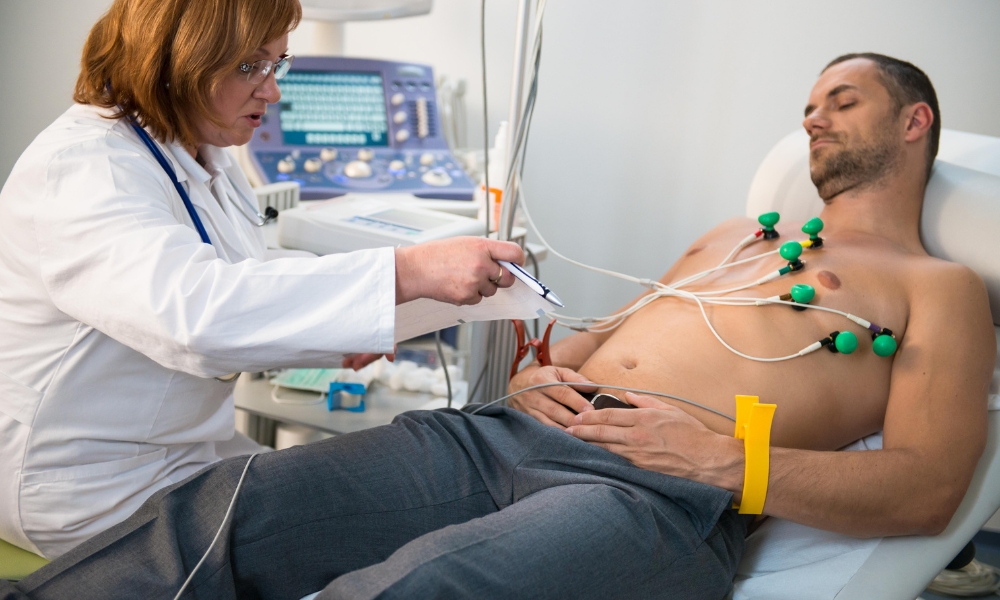
An EKG can show the heart’s electrical activity at a particular moment. If AFib is occurring during the test, the rhythm can often be identified.
The challenge comes when symptoms are intermittent. You might feel your heart racing on Tuesday evening but have a completely normal rhythm when you see the doctor Wednesday morning. In that situation, a longer period of monitoring may be more useful.
Your doctor may also consider your age, blood pressure, medical history, medications, family history, existing heart conditions, and other symptoms when determining which tests are appropriate.
What Tests May Be Used?
There is no single test that every person with palpitations needs. The appropriate evaluation depends on your symptoms and medical history.
EKG
An electrocardiogram, or EKG, records the heart’s electrical activity through sensors placed on the skin. It is one of the most important initial tests for evaluating an abnormal heartbeat.
An EKG can help identify AFib when the rhythm is occurring during the test. It may also provide information about other rhythm abnormalities and certain signs of underlying heart problems.
However, an EKG is only a snapshot in time. A normal EKG does not necessarily prove that intermittent palpitations are harmless or that AFib never occurs.
Apex Heart & Vascular Center provides electrocardiogram testing as part of its cardiovascular diagnostic services.
Holter or Other Heart Monitoring
If symptoms come and go, a longer-term monitor can help capture the heart rhythm while you are going about your normal routine.
A Holter monitor generally records continuously for a defined period. Other types of rhythm monitors may be used when symptoms are less frequent or when your doctor needs to observe your heart rhythm over a longer period.
This type of testing can be especially helpful when someone says, “My heart feels irregular, but by the time I get to the doctor’s office, it is normal.”
Echocardiogram
An echocardiogram uses ultrasound to create moving images of the heart. It can show the size and structure of the heart chambers, evaluate the heart valves, and provide information about pumping function.
An echocardiogram does not replace an EKG for diagnosing AFib, because it evaluates the heart’s structure and function rather than directly recording its electrical rhythm. However, it can help doctors understand whether an underlying structural heart condition is present.
Learn more about the echocardiogram offered by Apex Heart & Vascular Center.
Additional Cardiovascular Testing
Depending on your symptoms, your doctor may recommend other tests to look for contributing cardiovascular conditions. These may include stress testing, blood pressure evaluation, blood tests, or other diagnostic studies.
The purpose is not simply to put a label on the heartbeat. It is to understand the bigger picture: what rhythm is occurring, why it may be happening, whether the heart has structural problems, and what risks need to be addressed.
For patients who have symptoms that could be related to several cardiovascular conditions, a comprehensive evaluation may therefore be more useful than focusing only on the sensation of palpitations.
How Are AFib and Palpitations Treated?
Treatment depends on the cause. There is no universal “palpitation treatment” because palpitations are a symptom rather than a single disease.
Palpitations that stem from a temporary trigger can often be eased by removing or managing that specific factor. When an underlying medical condition is responsible, treatment directed at the condition itself may help reduce or even eliminate the symptoms.
If testing identifies an arrhythmia such as AFib, treatment becomes more specific.
Treating AFib
AFib treatment often has several goals. Depending on the individual patient, doctors may work to control the heart rate, restore or maintain a normal rhythm, reduce symptoms, and lower the risk of blood clots and stroke.
Some patients may receive medications to control heart rate or rhythm. Others may be candidates for electrical cardioversion or additional rhythm-management strategies.
Because AFib can increase the risk of blood clots in some people, your clinician may also evaluate whether medication to reduce stroke risk is appropriate. The decision depends on your individual risk factors rather than simply whether you have experienced palpitations.
Treating Palpitations Without AFib
If testing shows that your palpitations are not caused by AFib, the next step is identifying the actual cause.
For example, premature beats may be managed differently from a sustained arrhythmia. Palpitations associated with a medication or stimulant may require reviewing that exposure with your healthcare provider. If a thyroid disorder, anemia, electrolyte problem, or another medical condition is contributing, treating the underlying problem may help.
In some cases, the heart rhythm is normal and the sensation itself does not indicate a dangerous heart condition. Even then, identifying that the rhythm is normal can provide important reassurance.
Why Self-Diagnosis Can Be Risky
It can be tempting to search online for descriptions of AFib and compare them with what you feel. While learning about symptoms is useful, symptom matching cannot replace a heart rhythm evaluation.
Two people can experience nearly identical palpitations while having completely different underlying causes. Conversely, someone can have AFib with very subtle symptoms.
The goal is therefore not to guess whether a sensation “sounds like AFib.” The goal is to determine what your heart rhythm is actually doing.
Important Note: Do not start, stop, or change heart or blood-thinning medication based solely on information found online. AFib treatment needs to be individualized according to your heart rhythm, medical history, stroke risk, and other health factors.
Can AFib and Palpitations Happen at the Same Time?
Yes. In fact, palpitations are one of the ways some people notice that AFib is occurring.
During an AFib episode, the heartbeat may become fast and irregular enough that you can clearly feel it. You may notice fluttering in the chest, pounding in the throat, or a pulse that seems unpredictable.
But the presence of palpitations does not tell you how serious the rhythm is. An episode that feels dramatic may not be caused by AFib, while an episode of AFib may be surprisingly subtle.
This is why the combination of symptom history plus objective rhythm testing is so valuable.
Can AFib Go Away and Come Back?
Yes. Some forms of AFib occur intermittently. An episode may begin suddenly and stop on its own, allowing the heartbeat to return to a normal rhythm between episodes.
This pattern can make AFib difficult to identify because you may feel completely normal by the time you are evaluated.
If you experience recurring episodes, write down when they occur and how long they last. If possible, note whether you were resting, exercising, sleeping, feeling stressed, or experiencing another illness at the time.
Even if the symptoms disappear, recurring episodes should be discussed with a healthcare professional. AFib is not defined by how long you can feel the symptoms; it is defined by the abnormal heart rhythm that can be documented through appropriate testing.
Not Sure What Is Causing Your Palpitations?
A racing, fluttering, or irregular heartbeat can have many causes. If the episodes keep returning, cardiovascular testing can help identify whether AFib or another rhythm problem is involved.
What Should You Track If You Keep Having Palpitations?
If your palpitations happen more than once, keeping a simple record can give your healthcare professional useful information. You do not need complicated equipment or a perfect description. The goal is to identify patterns.
Start by recording when the episode began and how long it lasted. Note whether you were resting, exercising, sleeping, eating, feeling stressed, or recovering from an illness. Describe what the heartbeat felt like. Was it pounding, fluttering, racing, skipping, or simply irregular?
Also record any symptoms that happened at the same time. Dizziness, shortness of breath, unusual fatigue, weakness, chest discomfort, or near-fainting can be important clues.
If you have a home blood pressure monitor or another reliable way of checking your heart rate, you can record those measurements when symptoms occur. However, these readings should supplement—not replace—professional evaluation.
One particularly useful detail is whether the episode starts and stops suddenly or gradually. A sudden change in rhythm can provide different information from a heart rate that gradually increases during exercise and gradually slows afterward.
If you have a wearable device that records heart rate or rhythm information, you can discuss those readings with your healthcare provider. Consumer devices can provide useful clues, but they are not a substitute for clinical diagnosis.
When Are Palpitations an Emergency?
Most palpitations do not require emergency treatment. However, certain combinations of symptoms should never be ignored.
Seek emergency medical attention if palpitations occur with severe or persistent chest pain, significant difficulty breathing, fainting, sudden severe weakness, or symptoms that could indicate a stroke.
Stroke warning signs can include sudden weakness or numbness on one side of the body, sudden difficulty speaking or understanding speech, sudden vision problems, severe loss of balance, or a sudden severe headache.
These symptoms require emergency evaluation whether or not you already know that you have AFib.
Similarly, if your heart is racing or beating irregularly and you feel severely unwell, do not try to diagnose the episode yourself. Emergency professionals can assess your heart rhythm and determine whether immediate treatment is needed.
Why AFib Matters Even When Palpitations Are Mild
It is easy to think that an episode must feel dramatic to be medically important. That is not necessarily true with AFib.
Some people have only mild symptoms, while others notice significant palpitations. Some people have no symptoms whatsoever. The intensity of the sensation does not reliably tell you the medical significance of the rhythm.
AFib matters partly because it can increase the risk of blood clots and stroke in some patients. The risk is not identical for everyone. Age, high blood pressure, diabetes, previous stroke, heart failure, vascular disease, and other factors can affect an individual’s risk.
That is why receiving an accurate diagnosis is important. Once AFib has been confirmed, your healthcare professional can assess your personal risk and determine whether treatment is necessary.
AFib vs. Palpitations: A Simple Way to Remember the Difference
If you remember only one thing from this article, remember this:
Palpitations describe a feeling. AFib describes a heart rhythm.
You can feel palpitations while your heart rhythm is normal. You can also experience palpitations because of an abnormal rhythm such as AFib. And you can have AFib without noticing any unusual heartbeat.
That is why the sensation itself cannot provide a definitive diagnosis.
When palpitations are recurring or unexplained, the most useful next step is to determine what your heart is actually doing. An EKG may capture the rhythm during an episode, while longer-term monitoring may be useful when symptoms are intermittent.
Understanding this difference can prevent two common mistakes: assuming every palpitation is dangerous, or assuming recurring palpitations are harmless simply because they eventually stop.
AFib and Palpitation Evaluation in Houston, Tomball, and Cypress
If you are experiencing recurring heart palpitations or have concerns about an irregular heartbeat, Apex Heart & Vascular Center provides cardiovascular evaluation and diagnostic services for patients in the Houston area.
The practice has locations in Houston, Tomball, and Cypress, Texas, and provides evaluation for a broad range of cardiovascular symptoms and conditions.
Apex offers diagnostic services that may be useful when investigating palpitations or possible rhythm disorders, including electrocardiogram testing and echocardiography. Depending on the patient’s symptoms and medical history, additional heart rhythm or cardiovascular testing may be recommended.
The practice also evaluates symptoms commonly associated with cardiovascular conditions, including heart palpitations, dizziness, shortness of breath, and fatigue.
Dr. Yasir Akram, MD, MPH, FACC, FSCAI, and the Apex Heart & Vascular Center team provide cardiovascular care designed around the patient’s symptoms, risk factors, diagnostic findings, and overall heart health.
Recurring Palpitations? Find Out What Is Causing Them.
Palpitations can have many causes, and symptoms alone cannot tell you whether AFib is responsible. A cardiovascular evaluation can help identify the rhythm and determine whether further testing or treatment is appropriate.
Frequently Asked Questions About AFib and Heart Palpitations
Is AFib the same as heart palpitations?
No. Heart palpitations describe the sensation of feeling your heartbeat unusually strongly, quickly, or irregularly. AFib is a specific abnormal heart rhythm. AFib can cause palpitations, but many people experience palpitations without having AFib.
How can I tell if my palpitations are AFib?
You generally cannot tell with certainty based only on how the sensation feels. An EKG can identify AFib when the abnormal rhythm is occurring. If episodes come and go, longer-term heart rhythm monitoring may be needed to capture the rhythm.
Does AFib always cause a racing heartbeat?
No. AFib can cause a rapid and irregular heartbeat, but not everyone experiences a noticeably fast heartbeat. Some people have subtle symptoms such as fatigue or reduced exercise tolerance, while others have no symptoms.
Can anxiety cause palpitations that feel like AFib?
Yes. Stress and anxiety can make the heart beat faster or make you more aware of your heartbeat. However, recurring palpitations should not automatically be attributed to anxiety. If symptoms are new, persistent, or accompanied by concerning symptoms, medical evaluation is appropriate.
Can you have palpitations without having a heart problem?
Yes. Palpitations can occur with normal heart rhythms and may be triggered by exercise, stress, dehydration, stimulants, lack of sleep, or other temporary factors. However, recurrent or unexplained palpitations still deserve appropriate evaluation.
Can AFib come and go?
Yes. Some people have intermittent episodes of AFib that begin and stop on their own. Because the rhythm may return to normal before you are examined, longer-term heart monitoring can sometimes be useful.
Is an irregular pulse always AFib?
No. Other arrhythmias and premature beats can produce an irregular pulse. An irregular pulse can raise the possibility of an abnormal rhythm, but an EKG or appropriate rhythm monitoring is needed to determine the specific cause.
Can an EKG miss AFib?
An EKG can miss intermittent AFib if the abnormal rhythm is not occurring at the time of the test. In that situation, your healthcare provider may consider longer-term monitoring to capture episodes that happen less frequently.
When should I see a cardiologist for palpitations?
Consider cardiovascular evaluation when palpitations are new, recurrent, unexplained, prolonged, or accompanied by dizziness, shortness of breath, chest discomfort, fainting, or reduced exercise tolerance. Prompt or emergency evaluation may be necessary when severe symptoms occur.
Can AFib be treated?
Yes. Treatment depends on the individual’s symptoms, stroke risk, heart health, other medical conditions, and the type and pattern of AFib. Management may include medications, rhythm-control strategies, rate control, and treatment aimed at reducing the risk of blood clots and stroke.
Final Thoughts: Palpitations Are a Symptom, AFib Is a Rhythm
AFib and heart palpitations can sound like the same thing because both involve an unusual heartbeat. But they are not interchangeable.
Palpitations are what you feel. AFib is what the heart’s electrical system is doing.
You may experience pounding, fluttering, racing, or skipped beats without having AFib. At the same time, AFib can produce palpitations, shortness of breath, dizziness, fatigue, and other symptoms—or no noticeable symptoms at all.
If your heartbeat repeatedly feels unusual, do not rely solely on symptom descriptions to determine the cause. Keeping track of your episodes and discussing them with a healthcare professional can help determine whether an EKG, heart monitor, echocardiogram, or another test is appropriate.
And if palpitations occur with severe chest pain, major breathing difficulty, fainting, or possible stroke symptoms, seek emergency medical care immediately.
Medical Disclaimer: This article is for general educational purposes only and does not replace professional medical advice, diagnosis, or treatment. AFib and other heart rhythm disorders can have different symptoms from person to person. If you have new, severe, persistent, or worsening symptoms, contact a qualified healthcare professional or seek emergency medical attention when appropriate.