
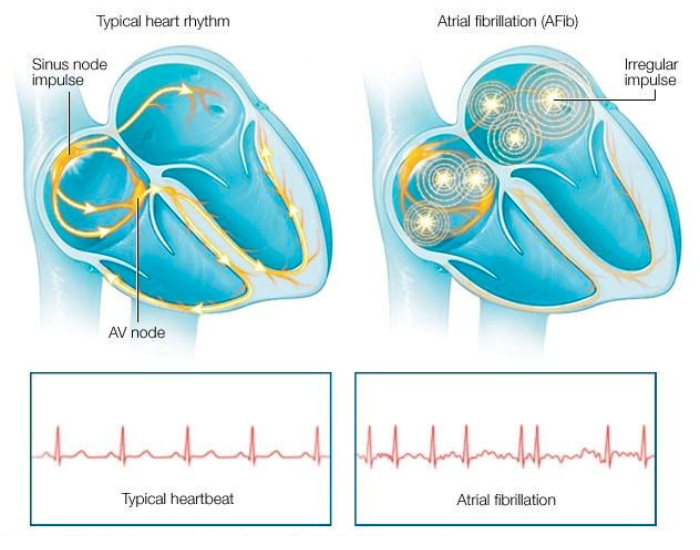
One of the most confusing things about atrial fibrillation is that it does not always stay there. You may suddenly feel your heart racing or beating irregularly, wonder what is happening, and then find that your heartbeat has returned to normal before you can even see a doctor. Hours or days later, the same thing can happen again.
So, can AFib come and go? Yes. A type of atrial fibrillation called paroxysmal AFib can begin suddenly and stop on its own. Episodes may last minutes, hours, or longer, but they typically end on their own rather than continuing continuously. Between episodes, the heart rhythm may return to normal.
That temporary nature can make paroxysmal AFib difficult to recognize. Some people assume that because their heartbeat becomes normal again, the episode was harmless. Others may never notice an episode at all. But intermittent AFib still matters because it can carry health risks and may require evaluation and treatment.
Important Note: A heartbeat that suddenly becomes irregular and later returns to normal does not automatically mean you have AFib. Other heart rhythm problems can come and go as well. An EKG or appropriate heart rhythm monitoring is needed to determine what is actually happening.
Can AFib Come and Go?
Yes. AFib can come and go, particularly when it occurs in a paroxysmal pattern. An episode can start suddenly, continue for a period of time, and then end without medical intervention. The heart may return to its normal rhythm afterward.
This is different from persistent AFib, in which the abnormal rhythm continues and generally does not return to normal on its own. There are also forms of AFib that remain present for much longer periods and may require a specific medical strategy to restore a normal rhythm.
The important point is that AFib does not have to be constant to be medically important. A person can feel completely normal between episodes and still have atrial fibrillation.
That can create a frustrating experience. You may tell your doctor, “My heart was racing last night, but it feels completely normal now.” Your doctor may then need to determine whether the episode was AFib, another arrhythmia, or a temporary change in heart rate caused by something else.
This is where rhythm monitoring can become especially useful.
What Is Paroxysmal AFib?
Paroxysmal AFib is atrial fibrillation that occurs in episodes and stops on its own. The abnormal rhythm begins and ends without needing an intervention to restore the normal rhythm.
The word “paroxysmal” essentially means that something occurs suddenly or intermittently. In the context of AFib, it describes a pattern rather than a completely different disease.
During an episode, the atria—the upper chambers of the heart—experience disorganized electrical activity. Instead of contracting in their normal coordinated rhythm, they quiver or beat irregularly. This produces an irregular heart rhythm that can affect how efficiently the heart pumps blood.
Once the episode ends, the heart may return to a normal rhythm. You may feel completely different afterward, which is one reason people sometimes dismiss the episode.
Paroxysmal AFib can happen once and never recur, or episodes can become a recurring problem. The frequency and duration can vary significantly between individuals.
Is Paroxysmal AFib Different From Permanent AFib?
Yes. The terms used to describe AFib are based partly on how long the abnormal rhythm lasts and whether it stops on its own or requires treatment.
Paroxysmal AFib occurs intermittently and stops on its own.
Persistent AFib lasts longer and generally requires medical treatment to restore a normal rhythm.
Long-standing persistent AFib refers to AFib that continues for an extended period.
Permanent AFib describes a situation in which the patient and healthcare team have decided not to pursue further attempts to restore a normal rhythm.
These categories can affect treatment decisions, but the most appropriate approach depends on the individual patient rather than the label alone.
How Long Does Paroxysmal AFib Last?
Paroxysmal AFib episodes can vary in duration. Some may last only a short time, while others continue for hours or longer before the heart returns to a normal rhythm.
There is no reliable way to predict exactly how long an individual episode will last. One episode may be brief while another lasts considerably longer.
This unpredictability is one reason intermittent AFib can be so difficult to identify. If your symptoms disappear before you reach a medical office, a standard EKG may show a normal rhythm.
That does not necessarily mean the earlier episode did not happen. It simply means the abnormal rhythm was not occurring when the EKG was recorded.
If episodes repeatedly occur and then disappear, your healthcare provider may consider a longer period of heart rhythm monitoring.
What Does an AFib Episode Feel Like?
Paroxysmal AFib can feel different from one person to another. Some people immediately notice that something has changed in their heartbeat. Others mainly notice a sudden drop in energy or difficulty catching their breath.
Common descriptions include a heartbeat that feels:
- Irregular
- Rapid
- Fluttering
- Pounding
- Chaotic or unpredictable
- Unusually noticeable
You might notice the sensation while sitting quietly, lying in bed, walking, exercising, or waking during the night. Some episodes seem to have an obvious trigger, while others appear to happen without warning.
People sometimes describe the experience as feeling like their heart is “jumping around.” Others say their pulse feels uneven when they check it.
However, these sensations are not unique to AFib. Other arrhythmias can feel similar, and stress, exercise, dehydration, medications, and stimulants can also cause a noticeable heartbeat.
If you frequently experience these symptoms, Apex Heart & Vascular Center provides evaluation for heart palpitations and other cardiovascular symptoms.
What Symptoms Can Happen During an AFib Episode?
Palpitations are one of the most recognizable symptoms, but they are not the only possible sign of paroxysmal AFib.
Palpitations
You may suddenly become aware that your heart is beating faster, harder, or less regularly than usual. The sensation can be particularly noticeable when you are resting.
Some people feel a rapid heartbeat, while others mainly notice that the rhythm seems irregular.
Shortness of Breath
AFib can make physical activity feel more difficult. You may become winded while walking, climbing stairs, or performing an activity that normally does not leave you short of breath.
Some people experience breathing difficulty even while resting. Shortness of breath has many possible causes, so it should not automatically be attributed to AFib. Apex also evaluates patients experiencing shortness of breath.
Dizziness or Lightheadedness
An irregular heartbeat can sometimes leave you feeling dizzy, lightheaded, weak, or unsteady. You may feel as though you need to sit down until the sensation passes.
If dizziness is severe or accompanied by fainting, chest pain, or significant breathing difficulty, seek urgent medical attention.
Fatigue
Some people notice fatigue rather than dramatic palpitations. You might suddenly feel drained or discover that ordinary activities require more effort.
Fatigue can remain after an episode has ended, although persistent tiredness has many possible causes and should be evaluated in context.
Chest Discomfort
Chest discomfort associated with AFib should not be automatically attributed to the arrhythmia itself. Pain or pressure in the chest may arise from other cardiovascular issues, many of which demand immediate medical evaluation.
If chest discomfort is severe, persistent, or accompanied by significant shortness of breath, sweating, nausea, fainting, or other concerning symptoms, seek emergency medical care.
Important Note: The fact that an AFib-like episode stops does not mean you should ignore it. Intermittent symptoms can still indicate an abnormal heart rhythm, and documenting the episode can help your healthcare provider decide whether further testing is needed.
What Can Trigger Paroxysmal AFib?
Sometimes an AFib episode appears to happen out of nowhere. Other times, people notice that episodes tend to occur around particular situations or health changes.
Potential triggers or contributing factors can include poor sleep, dehydration, illness, emotional stress, alcohol, and certain stimulants. Underlying cardiovascular conditions can also make AFib more likely.
High blood pressure is an important cardiovascular risk factor. Conditions involving the heart valves, coronary arteries, or heart muscle can also affect the likelihood of developing an abnormal rhythm.
Not everyone responds to the same triggers. Something that seems to provoke an episode in one person may have no noticeable effect on another.
Can Stress Trigger AFib?
Stress can affect the cardiovascular system and may contribute to episodes in some people. It can increase heart rate and activate the body’s stress response, which may make an existing rhythm problem more noticeable.
However, stress should not become an automatic explanation for every episode of a racing or irregular heartbeat. If the symptoms are recurring, it is important to determine whether an actual arrhythmia is present.
Can Alcohol Trigger AFib?
Alcohol can contribute to AFib episodes in some people. The relationship varies between individuals, and an episode does not necessarily occur every time someone drinks.
If you repeatedly notice a relationship between alcohol consumption and an irregular heartbeat, discuss the pattern with your healthcare professional.
Can Dehydration Cause an Irregular Heartbeat?
Dehydration can affect fluid and electrolyte balance and may contribute to palpitations or changes in heart rate. This can be especially relevant during illness, hot weather, or periods of significant fluid loss.
However, dehydration-related palpitations and AFib are not the same diagnosis. If irregular heartbeat episodes keep returning, medical evaluation remains important.
Can Your Heart Rhythm Be Normal Between AFib Episodes?
Yes. This is one of the defining features of paroxysmal AFib.
Once an episode ends, the heart may return to a normal rhythm. You may suddenly feel like yourself again. The palpitations disappear, your breathing improves, and you may wonder whether you imagined the whole episode.
You did not necessarily imagine it. The problem is that a routine examination performed after the episode may not show evidence of the rhythm disturbance.
This is why a normal EKG between episodes does not always rule out intermittent AFib. If your symptoms are recurring, your doctor may recommend a heart monitor that records your rhythm for a longer period.
Keeping a record of your symptoms can make that evaluation more useful. Note the time an episode begins, how long it lasts, what you were doing, and whether you experienced palpitations, dizziness, shortness of breath, fatigue, or chest discomfort.

Does Your Irregular Heartbeat Keep Coming Back?
Episodes that start and stop can be difficult to capture during a routine visit. Cardiovascular evaluation and appropriate rhythm monitoring can help determine whether paroxysmal AFib or another arrhythmia is responsible.
When Should You Worry About an AFib Episode?
Because paroxysmal AFib can stop on its own, it can be tempting to wait for every episode to pass. But the fact that your symptoms eventually disappear does not tell you whether the episode was medically significant.
Pay attention to new, unusually severe, prolonged, or increasingly frequent episodes. A change from your usual pattern is particularly important. For example, if your episodes normally last a few minutes but one continues much longer, or if you suddenly develop symptoms you have never experienced before, contact a healthcare professional promptly.
Some symptoms require emergency attention rather than a routine appointment. These include significant chest pain or pressure, severe difficulty breathing, fainting, sudden severe weakness, or symptoms that could indicate a stroke.
AFib and Stroke Warning Signs
One of the reasons doctors take AFib seriously is its association with an increased risk of blood clots and stroke in some patients. AFib can allow blood to move abnormally through the upper chambers of the heart, which can contribute to clot formation.
Stroke symptoms can appear suddenly. Warning signs may include weakness or numbness affecting one side of the body, difficulty speaking or understanding speech, sudden vision changes, severe loss of balance, or a sudden severe headache.
If these symptoms occur, do not wait for the heart rhythm to return to normal. Seek emergency medical care immediately.
How Is Paroxysmal AFib Diagnosed?
Diagnosing paroxysmal AFib can be more challenging than diagnosing AFib that is continuously present. The reason is straightforward: the abnormal rhythm may not be happening when you are examined.
Your healthcare provider will usually begin with your symptoms and medical history. You may be asked what the heartbeat feels like, how suddenly it begins, how long episodes last, how often they occur, and whether anything seems to trigger them.
Your doctor may also ask about high blood pressure, heart disease, diabetes, sleep problems, previous cardiovascular conditions, medications, alcohol use, family history, and other factors that may affect your risk.
The next step is often to record the heart’s electrical activity.
Can an EKG Detect Paroxysmal AFib?
Yes, but only if AFib is occurring while the EKG is being recorded.
An electrocardiogram records the heart’s electrical activity over a short period. If you happen to be experiencing an AFib episode at that moment, the abnormal rhythm may be visible.
The difficulty is that paroxysmal AFib may disappear before the appointment. You could have an abnormal rhythm at home and a normal rhythm in the doctor’s office.
That is why a normal EKG does not always end the investigation when the symptoms are recurring or suspicious.
What Tests Can Detect Intermittent AFib?
When symptoms are intermittent, your healthcare provider may recommend a longer period of rhythm monitoring. The specific monitor depends on how frequently your symptoms occur and what your doctor is trying to determine.
Holter Monitoring
A Holter monitor continuously records the heart’s rhythm during normal daily activities for a limited period. It can be particularly useful when symptoms occur relatively frequently.
The advantage is that you do not have to be experiencing symptoms inside the doctor’s office. If an episode happens while you are wearing the monitor, the recording may capture the rhythm and help your physician determine whether AFib is responsible.
Event and Extended Rhythm Monitoring
When episodes happen less frequently, longer-term monitoring may provide a better chance of capturing one. Different monitoring devices are designed for different situations.
The goal is always the same: connect what you feel with what your heart rhythm is actually doing at that moment.
Echocardiogram
An echocardiogram does not diagnose AFib in the same way an EKG does. Instead, it provides information about the structure and function of the heart.
An echocardiogram can help evaluate the heart chambers, valves, pumping function, and other structural features. This information can be important because underlying heart conditions may influence both AFib risk and treatment decisions.
Other Testing
Depending on your symptoms and medical history, your healthcare provider may recommend additional testing. This may include blood tests or other cardiovascular studies to look for conditions that could contribute to an abnormal rhythm.
The exact combination of tests should be based on your individual circumstances rather than a standard checklist.
How Is Paroxysmal AFib Treated?
Treatment for paroxysmal AFib is individualized. Not everyone with intermittent AFib needs exactly the same treatment, and the decision depends on factors such as symptoms, age, other medical conditions, stroke risk, heart structure, and how frequently the episodes occur.
There are several broad goals of AFib treatment: reducing symptoms, controlling the heart rate or rhythm, preventing blood clots and stroke when appropriate, and addressing conditions that contribute to AFib.
Medications
Some patients may be prescribed medications to help control the heart rate or maintain a more normal rhythm. The choice depends on the patient’s specific rhythm and overall cardiovascular health.
Some people with AFib may also need medication to reduce the risk of blood clots. This decision is based on individual stroke-risk factors and should be made with a healthcare professional.
Do not start or stop prescription heart medication or blood-thinning medication without medical guidance.
Rhythm Control
For some patients, controlling the rhythm rather than simply controlling the heart rate may be an important part of treatment. Depending on the individual situation, this can involve medication or procedures such as cardioversion.
The right approach depends on factors that cannot be determined from symptoms alone.
Catheter Ablation
Some patients with symptomatic AFib may be considered for catheter-based procedures designed to reduce the abnormal electrical signals responsible for the arrhythmia.
Whether ablation is appropriate depends on the type of AFib, symptoms, previous treatment, underlying heart conditions, and other individual factors. It is not automatically necessary simply because someone has paroxysmal AFib.
Can You Reduce AFib Episodes?
There is no guaranteed way to prevent every episode of paroxysmal AFib, but managing cardiovascular health can be an important part of reducing risk and improving overall heart health.
Start with the factors you can realistically control. Work with your healthcare professional to manage high blood pressure, cholesterol, diabetes, and other cardiovascular conditions when applicable.
Regular physical activity can support cardiovascular health, but your exercise plan should be appropriate for your health and fitness level. If exercise repeatedly triggers significant palpitations, dizziness, chest discomfort, or unusual shortness of breath, discuss the symptoms with a healthcare professional.
Sleep also matters. Poor or disrupted sleep can affect cardiovascular health, and some people with AFib may also have sleep-related conditions that deserve evaluation.
If you have identified personal triggers—such as alcohol, dehydration, or particular situations—discuss them with your clinician rather than assuming that eliminating one trigger will completely prevent AFib.
Managing your overall cardiovascular risk is more useful than focusing exclusively on individual episodes.
What Should You Do During a Possible AFib Episode?
If you suddenly notice an irregular or racing heartbeat and you are otherwise stable, try to remain calm and take note of what is happening.
Record the approximate start time. Note what you were doing immediately beforehand and whether you have symptoms such as dizziness, shortness of breath, chest discomfort, or weakness.
If you have been given specific instructions by your healthcare professional for managing known AFib episodes, follow those instructions.
Do not assume that an episode is safe simply because you have experienced something similar before. A significant change in symptoms or severity deserves medical attention.
And if severe chest pain, significant breathing difficulty, fainting, or possible stroke symptoms develop, seek emergency medical care immediately.
Why Keeping an AFib Symptom Diary Can Help
When a heart rhythm comes and goes, your memory may be the only record of what happened between appointments. A simple symptom diary can make that information much more useful.
Write down the date, start time, approximate duration, symptoms, activity, possible triggers, and how you felt afterward. If you use a personal heart-rate device or an FDA-cleared rhythm-monitoring feature, keep relevant recordings available for discussion with your healthcare provider.
Do not become overly focused on obtaining a perfect number. A useful symptom history is often more valuable than repeatedly checking your pulse throughout the day.
The goal is to help your clinician identify patterns and decide whether additional testing is appropriate.
Think Your AFib Episodes Are Coming and Going?
Intermittent symptoms can be difficult to capture with a short office test. Apex Heart & Vascular Center provides cardiovascular evaluation and diagnostic testing to help investigate recurring heart rhythm symptoms.

Paroxysmal AFib Care in Houston, Tomball, and Cypress
If you are experiencing recurring episodes of a racing, fluttering, or irregular heartbeat, cardiovascular evaluation can help determine whether AFib or another rhythm problem may be responsible.
Apex Heart & Vascular Center provides cardiovascular care at locations serving patients in Houston, Tomball, and Cypress, Texas.
The practice evaluates symptoms such as heart palpitations, dizziness, fatigue, shortness of breath, and other symptoms that can occur with cardiovascular conditions. Diagnostic services include EKG testing and echocardiography, with additional cardiovascular testing available when clinically appropriate.
Dr. Yasir Akram, MD, MPH, FACC, FSCAI, and the Apex team evaluate cardiovascular symptoms in the context of the patient’s medical history, risk factors, examination, and diagnostic findings.
Recurring Irregular Heartbeat? Get It Evaluated.
AFib does not have to happen continuously to deserve attention. If episodes repeatedly start and stop, proper rhythm evaluation can help determine what is happening and whether treatment is needed.
Frequently Asked Questions About Paroxysmal AFib
Can AFib come and go on its own?
Yes. Paroxysmal AFib can begin suddenly and stop on its own, allowing the heart to return to a normal rhythm between episodes. Because the rhythm may be normal when you see your doctor, intermittent AFib can sometimes require longer-term heart rhythm monitoring to confirm.
How long can paroxysmal AFib last?
The duration can vary from one person to another. Episodes may be brief or continue for a longer period before stopping on their own. If an episode is unusually long, severe, or different from your normal pattern, contact your healthcare professional for guidance.
Can you have AFib for a few minutes and then feel normal?
Yes. Some people with paroxysmal AFib feel an abrupt change in their heartbeat and then return to feeling normal after the episode ends. Feeling normal afterward does not prove that the earlier episode was harmless or that it was not AFib.
Can paroxysmal AFib get worse over time?
AFib patterns can change over time, although the progression is different for each person. Some people continue to have intermittent episodes, while others develop episodes that last longer or occur more frequently. Managing cardiovascular risk factors and receiving appropriate medical care can be important parts of long-term management.
Can a normal EKG rule out paroxysmal AFib?
No. A standard EKG records the heart rhythm during a short period. If your AFib has stopped before the test, the EKG may show a normal rhythm. When symptoms are intermittent, your doctor may recommend a Holter monitor or another form of extended rhythm monitoring.
What does paroxysmal AFib feel like?
Some people notice a racing, fluttering, pounding, or irregular heartbeat. Others experience shortness of breath, dizziness, fatigue, weakness, or reduced exercise tolerance. Some people have few or no noticeable symptoms. Symptoms alone cannot confirm AFib.
Can stress cause paroxysmal AFib?
Stress may contribute to palpitations and can be a trigger for AFib in some people. However, recurring irregular heartbeats should not automatically be blamed on stress. Medical evaluation can determine whether an actual rhythm abnormality is occurring.
Is paroxysmal AFib dangerous?
Paroxysmal AFib can be medically important even when episodes stop on their own. AFib can increase the risk of blood clots and stroke in some people. Individual risk varies, so your healthcare professional can determine whether preventive treatment is appropriate.
Do I need treatment if my AFib goes away by itself?
Possibly. The fact that an episode stops on its own does not determine whether treatment is needed. Treatment decisions may depend on your symptoms, stroke risk, other health conditions, heart structure, episode pattern, and overall cardiovascular risk.
When should I go to the emergency room for AFib?
Seek emergency medical attention when an irregular or racing heartbeat occurs with severe or persistent chest pain, significant difficulty breathing, fainting, severe weakness, or possible stroke symptoms such as sudden one-sided weakness, difficulty speaking, or sudden vision problems. Do not wait for the episode to stop if serious symptoms are present.
Final Thoughts: AFib Does Not Have to Be Constant
One of the most important things to understand about atrial fibrillation is that it can be intermittent. Paroxysmal AFib can start suddenly, continue for a period of time, and then stop on its own. Between episodes, your heartbeat may feel completely normal.
That pattern can make AFib easy to overlook. You may experience a strange heartbeat at home and feel perfectly fine by the time you reach a medical office. A short EKG may then show a normal rhythm even though the earlier symptoms were real.
If you repeatedly experience a racing, fluttering, or irregular heartbeat, keep track of when the episodes happen, how long they last, and what other symptoms occur. This information can help your healthcare provider determine whether rhythm monitoring or other cardiovascular testing is appropriate.
Most importantly, do not judge the seriousness of an episode solely by whether it eventually goes away. Intermittent AFib can still require medical evaluation, and the right treatment depends on your individual cardiovascular risk and health history.
If an episode is accompanied by severe chest pain, major difficulty breathing, fainting, or symptoms of a possible stroke, seek emergency medical attention immediately.
Medical Disclaimer: This article is intended for general educational purposes and does not replace professional medical advice, diagnosis, or treatment. Atrial fibrillation can present differently from person to person, and symptoms such as palpitations, dizziness, shortness of breath, and chest discomfort can have many causes. Speak with a qualified healthcare professional about new or recurring symptoms. Seek emergency medical care for severe or potentially life-threatening symptoms.