
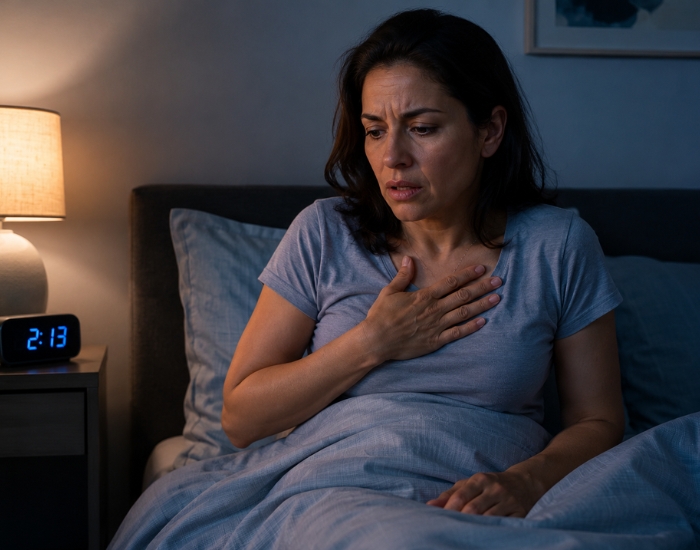
Waking up in the middle of the night with a racing, pounding, or fluttering heartbeat can feel frightening. Many patients describe it as a sudden awareness of their heart beating harder or faster than usual. If you’ve experienced heart palpitations at night, you may wonder whether it’s anxiety, stress, or a more serious heart condition.
Although occasional nighttime palpitations can be harmless, persistent or severe episodes should never be ignored. Understanding the causes of nighttime palpitations—and knowing when to seek professional evaluation—can help protect your long-term heart health.
Table of Contents
- What Are Heart Palpitations?
- Why Do Palpitations Happen at Night?
- Common Causes of Heart Palpitations at Night
- Symptoms That May Accompany Palpitations
- Risk Factors for Heart Rhythm Issues
- When to See a Cardiologist
- How Nighttime Palpitations Are Diagnosed
- Heart Palpitations Treatment Options
- Lifestyle Changes to Reduce Episodes
- When to Seek Emergency Care
- Why Specialist Care Matters
What Are Heart Palpitations?
Heart palpitations are sensations where you become unusually aware of your heartbeat. You may feel:
- Racing or rapid beats
- Fluttering in the chest
- Skipped or extra beats
- Pounding sensations
- Irregular rhythms
Palpitations can last seconds or minutes. Some occur occasionally, while others happen frequently.
For a deeper understanding of possible causes and evaluation, you can learn more about heart palpitations and how they are medically assessed.
Why Do Palpitations Happen at Night?
Many people notice palpitations more when lying down or trying to fall asleep. There are several reasons for this:
- Increased awareness: When the environment is quiet, you’re more likely to notice normal heart rhythms.
- Body position: Lying on your left side may make heartbeats feel stronger.
- Stress processing: Anxiety and emotional stress often surface at night.
- Hormonal changes: Fluctuations in adrenaline levels can influence heart rhythm.
While increased awareness can explain mild cases, persistent nighttime palpitations may signal an underlying medical issue.
Common Causes of Heart Palpitations at Night
1. Stress and Anxiety
Even if you feel calm during the day, your body may process stress at night. Anxiety activates the sympathetic nervous system, increasing heart rate.
2. Caffeine or Stimulants
Coffee, energy drinks, nicotine, and certain medications can trigger palpitations—especially if consumed later in the day.
3. Alcohol Consumption
Alcohol may initially cause relaxation but can disrupt heart rhythm hours later.
4. Hormonal Changes
Pregnancy, menopause, and thyroid disorders can affect heart rhythm.
5. Sleep Apnea
Obstructive sleep apnea causes repeated breathing interruptions during sleep, which may trigger heart rhythm disturbances.
6. Dehydration
Low fluid levels can affect electrolyte balance, increasing the likelihood of irregular beats.
7. Arrhythmias
Certain heart rhythm disorders may present more noticeably at night, including:
- Atrial fibrillation
- Supraventricular tachycardia (SVT)
- Premature atrial or ventricular contractions
These conditions may require formal medical evaluation.
Symptoms That May Accompany Palpitations
Nighttime palpitations are not always isolated. You should pay attention if you also experience:
- Chest discomfort requiring possible chest pain treatment
- Shortness of breath
- Dizziness or lightheadedness
- Fainting
- Sweating
- Fatigue during the day
When palpitations disrupt sleep regularly, they can significantly affect overall health and quality of life.
Risk Factors for Heart Rhythm Issues
Certain individuals are more prone to experiencing nighttime palpitations:
- High blood pressure
- Coronary artery disease
- Thyroid disorders
- Diabetes
- Obesity
- Smoking
- Family history of arrhythmias
- Excessive caffeine or alcohol intake
Additionally, aging increases the risk of electrical conduction abnormalities in the heart.
When to See a Cardiologist
Occasional brief palpitations without other symptoms may not be dangerous. However, you should consult a specialist if:
- Episodes occur frequently
- They wake you from sleep
- They last longer than a few minutes
- You feel dizzy or faint
- You have known heart disease
A trusted cardiologist in Houston can perform a thorough evaluation to determine whether your palpitations are benign or require treatment.
Early evaluation is especially important for individuals with cardiovascular risk factors.
How Nighttime Palpitations Are Diagnosed
A cardiology evaluation typically begins with a detailed medical history and physical examination.
Electrocardiogram (ECG)
Records electrical activity of the heart.
Holter or Event Monitor
Worn for 24–48 hours (or longer) to capture abnormal rhythms.
Echocardiogram
An echocardiogram test uses ultrasound imaging to assess heart structure and pumping function.
Stress Testing
A nuclear stress test may be recommended if coronary artery disease is suspected.
Blood Tests
To evaluate thyroid function, electrolyte levels, or anemia.
These diagnostic tools help identify whether palpitations are related to structural heart disease, electrical abnormalities, or systemic causes.
Heart Palpitations Treatment Options
Treatment depends on the underlying cause and severity.
For comprehensive heart palpitations treatment, a cardiologist may recommend one or more of the following:
Lifestyle Adjustments
- Reduce caffeine and alcohol
- Improve sleep hygiene
- Manage stress through relaxation techniques
- Stay hydrated
- Maintain regular exercise
Medications
Depending on diagnosis, medications may include:
- Beta-blockers
- Calcium channel blockers
- Antiarrhythmic drugs
Advanced Treatments
In certain cases:
- Catheter ablation may correct abnormal electrical pathways
- Implantable devices such as pacemakers may be necessary
Early intervention often prevents complications such as stroke or heart failure.
Lifestyle Changes to Reduce Nighttime Episodes
Improving daily habits can significantly reduce palpitations:
- Avoid heavy meals before bedtime
- Limit screen time before sleep
- Practice deep breathing or meditation
- Keep a symptom diary to identify triggers
- Elevate the head slightly during sleep
Monitoring your symptoms helps your physician identify patterns and tailor treatment accordingly.
When to Seek Emergency Care
Call emergency services immediately if palpitations occur with:
- Severe chest pain
- Shortness of breath
- Fainting
- Sudden weakness
- Symptoms lasting more than 15–20 minutes
These may indicate a medical emergency such as a heart attack or dangerous arrhythmia.
Why Specialist Care Matters
Nighttime palpitations can range from harmless to potentially serious. That’s why working with a trusted heart specialist Houston residents rely on is essential.
A cardiovascular specialist can:
- Identify underlying rhythm disorders
- Evaluate structural heart disease
- Recommend advanced diagnostic testing
- Develop a personalized treatment plan
- Provide ongoing monitoring
Addressing symptoms early offers peace of mind and protects long-term cardiovascular health.
Final Thoughts
Heart palpitations at night can be unsettling, especially when they disrupt sleep or cause anxiety. While many cases are related to stress, caffeine, or temporary factors, persistent or severe episodes deserve medical evaluation.
Because nighttime symptoms may reflect underlying arrhythmias or cardiovascular conditions, timely consultation with a cardiologist ensures accurate diagnosis and appropriate care.
If you frequently wake up with a racing heartbeat, don’t ignore the warning signs. Expert evaluation can help restore restful sleep—and safeguard your heart.
Medical Disclaimer: This article is for educational purposes only and does not substitute professional medical advice, diagnosis, or treatment. If you experience severe chest pain, shortness of breath, fainting, or prolonged palpitations, seek immediate medical attention or consult a qualified healthcare provider.