
Walking should not cause persistent pain. Yet many people notice cramping, tightness, or aching in their legs after walking a certain distance. Because this discomfort often improves with rest, it is easy to dismiss it as aging, muscle fatigue, or being out of shape. However, recurring leg pain during activity may signal a circulation problem known as claudication, often caused by Peripheral Artery Disease (PAD).
Peripheral artery disease occurs when arteries that supply blood to the legs become narrowed by plaque buildup. Reduced blood flow prevents muscles from receiving enough oxygen during activity, triggering pain. While symptoms may start mildly, PAD is a serious vascular condition closely linked to heart attack and stroke risk.
If you are experiencing leg pain that repeatedly occurs while walking, Apex Heart & Vascular Center can help. Call (832) 305-5977 to schedule an evaluation in Houston, Tomball, or Cypress.
Peripheral artery disease develops when plaque—made up of cholesterol, fat, and inflammatory cells—builds up inside the arteries. This process, called atherosclerosis, narrows blood vessels and restricts circulation.
When PAD affects the legs, blood flow to the lower extremities becomes limited.
Importantly, PAD is not just a leg problem. It is considered a marker of systemic cardiovascular disease. Many patients with PAD also have coronary artery disease, which increases the risk of heart attack and stroke.
For this reason, patients experiencing symptoms of claudication should be evaluated by a cardiologist in Houston who can assess both vascular circulation and overall heart health.
Why Reduced Blood Flow Causes Pain
Muscles rely on oxygen to function properly. During exercise:
- Oxygen demand increases
- Narrowed arteries limit supply
- Waste products build up in muscle tissue
- Pain signals are triggered
When you stop walking, oxygen demand decreases. Blood flow becomes sufficient again, and the pain subsides.
This activity-related pain pattern is one of the most recognizable signs of claudication.
Common Symptoms of Peripheral Artery Disease
Symptoms vary depending on the severity of blockage. In addition to leg pain while walking, patients may experience:
- Muscle cramping
- Leg weakness or heaviness
- Numbness
- Coldness in one foot compared to the other
- Slow-healing wounds on the feet or toes
- Shiny or discolored skin on the legs
- Hair loss on the lower legs
If pain begins to occur even at rest, this may indicate advanced PAD and requires urgent medical evaluation.
When Leg Pain May Signal a Serious Circulation Problem
While muscle soreness after intense exercise is common, leg pain that:
- Occurs consistently with walking
- Improves quickly with rest
- Limits daily activity
- Is accompanied by numbness or weakness
- Involves foot wounds that do not heal
should prompt medical evaluation.
Because PAD is strongly associated with coronary artery disease, your provider may also evaluate whether additional testing or chest pain treatment is necessary to rule out heart-related concerns.
Early diagnosis can significantly reduce the risk of serious cardiovascular events.
How Peripheral Artery Disease Is Diagnosed
At Apex Heart & Vascular Center, evaluation begins with a detailed medical history and physical examination. Your provider will review:
- Symptom patterns
- Medical conditions
- Lifestyle habits
- Family history
During the exam, pulses in the legs and feet are checked. Weak pulses may indicate reduced circulation.
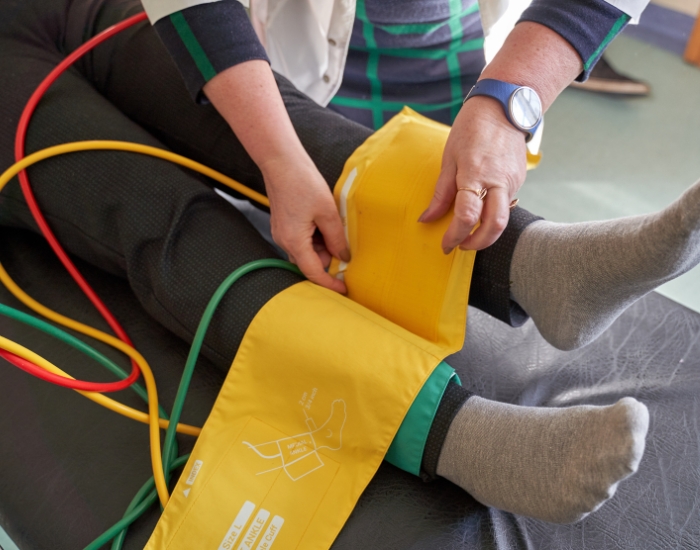
Blood pressure measurements in the arms and ankles are often compared using a simple test called the ankle-brachial index (ABI).
Tests Used to Evaluate Circulation and Heart Health
After reviewing your symptoms and physical exam findings, your provider may recommend additional testing to confirm a diagnosis and assess your overall cardiovascular risk. These tests not only evaluate blood flow in the legs but also help determine whether heart disease is present, since peripheral artery disease often occurs alongside coronary artery disease.
An echocardiogram test uses ultrasound imaging to examine the heart’s structure and function. Although it does not directly visualize the leg arteries, it allows physicians to assess heart muscle strength, valve function, and overall cardiac performance. This information is important because patients with PAD frequently have underlying heart conditions that require attention.
In addition, a nuclear stress test measures how well blood flows to the heart during physical exertion. By identifying areas of reduced circulation in the heart muscle, this test helps detect coronary artery disease, which commonly coexists with PAD. Identifying heart-related blockages early can significantly reduce the risk of heart attack.
To evaluate the leg arteries more directly, your provider may order vascular imaging studies such as Doppler ultrasound, CT angiography, or magnetic resonance angiography (MRA). These advanced imaging tools allow doctors to pinpoint the exact location of arterial narrowing and determine how severe the blockage has become. With accurate imaging, your care team can create a more precise and effective treatment plan.
Treatment Options for Claudication
Treatment for claudication focuses on two primary goals: improving blood flow to the legs and reducing overall cardiovascular risk. Because PAD affects the entire circulatory system, treatment often combines medication, lifestyle changes, and in some cases, procedural intervention.
Medications
Physicians frequently prescribe medications to slow disease progression and relieve symptoms. These may include drugs that lower cholesterol, control blood pressure, prevent blood clots, and in some cases, improve walking distance. By addressing these risk factors directly, medication therapy helps stabilize plaque buildup and protect both vascular and heart health.
Supervised Exercise Therapy
Structured walking programs play a powerful role in managing claudication. Under medical guidance, patients follow a gradual walking plan designed to improve endurance. Over time, regular exercise encourages the development of collateral circulation—small alternative blood vessels that form to bypass blockages. As these new pathways strengthen, many patients notice reduced pain and increased walking distance.
Minimally Invasive Procedures
If symptoms persist despite conservative treatment, minimally invasive procedures may be recommended. Techniques such as angioplasty, stent placement, or atherectomy can open narrowed arteries and restore blood flow. These procedures typically involve small incisions and shorter recovery times compared to traditional surgery, making them effective options for many patients.
Surgical Treatment
In more advanced or severe cases, bypass surgery may be necessary. During this procedure, surgeons create a new route for blood to flow around the blocked artery. Although surgery is usually reserved for significant blockages, it can dramatically improve circulation and relieve symptoms when other treatments are not sufficient.
Lifestyle Changes That Improve Circulation
Lifestyle modifications are essential for managing PAD and protecting long-term heart health:
- Quit smoking
- Follow a heart-healthy diet
- Exercise regularly
- Maintain a healthy weight
- Manage diabetes
- Control blood pressure and cholesterol
These steps not only improve leg symptoms but also reduce heart attack and stroke risk.
When to See a Heart Specialist
Leg pain during walking should never be ignored—especially if it follows a consistent pattern or worsens over time.
Because peripheral artery disease is closely linked to cardiovascular disease, evaluation by a heart specialist Houston patients trust is essential.
Early diagnosis allows treatment to begin sooner, improving walking ability and long-term vascular outcomes.
Don’t Ignore Leg Pain — Get Expert Vascular Care
Leg pain when walking may seem minor at first, but it can be an early warning sign of peripheral artery disease. If you are experiencing recurring leg discomfort with activity, the team at Apex Heart & Vascular Center is here to help.
We proudly serve patients in Houston, Tomball, and Cypress with comprehensive cardiovascular and vascular care. Call (832) 3055977 or book online to schedule your appointment today.
At Apex Heart & Vascular Center, patients are cared for by Yasir Akram, MD, MPH, FACC, FSCAI, an accomplished interventional and general cardiologist specializing in advanced cardiovascular and peripheral vascular care. Dr. Akram is board-certified in Echocardiography, Nuclear Cardiology, and Vascular Ultrasound (RPVI) and holds fellowship status with the American College of Cardiology. His expertise includes balloon angioplasty, complex coronary and peripheral interventions, structural heart procedures such as PFO and ASD closures, pacemaker and loop recorder implantation, and advanced cardiac support techniques including the Impella heart pump and intra-aortic balloon pump. With additional board certification in Preventive Medicine and a strong background in cardiovascular research, Dr. Akram is dedicated to delivering evidence-based, preventive, and innovative care to patients throughout the Greater Houston area.
Medical Disclaimer: This article is for educational purposes only and does not replace professional medical advice, diagnosis, or treatment. If you are experiencing severe leg pain, circulation problems, or symptoms of heart disease, seek immediate medical attention. Always consult a qualified healthcare provider regarding concerns about vascular or cardiovascular health.