
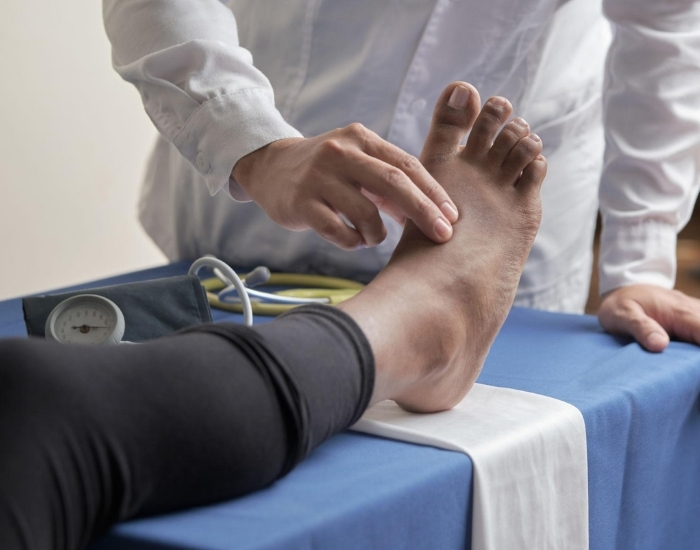
Your legs carry you through your day, so a change in how they feel can be easy to notice. Maybe your feet seem colder than usual. Perhaps your calves become tired or painful after walking, or your ankles look swollen by the evening. You might even notice numbness, tingling, changes in skin color, or a small wound that does not seem to heal as quickly as expected.
It is natural to wonder, “Could this be poor circulation?”
Sometimes it can be. But poor circulation is not one single condition, and the way it feels can vary considerably depending on whether the problem involves the arteries, veins, or another part of the cardiovascular or nervous system.
Reduced arterial blood flow can cause aching, cramping, heaviness, cold feet, or pain that develops during walking. Venous circulation problems can cause swelling, heaviness, aching, skin changes, or discomfort that becomes more noticeable after standing for a long time.
Other conditions—including nerve problems, arthritis, muscle injuries, and blood clots—can produce symptoms that feel similar.
The pattern matters. Where the symptoms occur, when they appear, what makes them worse, and what makes them better can help a healthcare professional determine whether circulation may be involved.
Important Note: Sudden severe leg pain, a suddenly cold or pale leg, new numbness or weakness, or a major change in the color or temperature of one leg can signal a serious circulation problem. Seek urgent medical attention rather than waiting for the symptoms to disappear.
What Does Poor Circulation in the Legs Feel Like?
Poor circulation in the legs can feel different from person to person. Common sensations include leg pain, cramping, heaviness, weakness, cold feet, numbness, tingling, or unusual fatigue.
Some people notice symptoms mainly when they walk or exercise. Others experience discomfort after standing for a long time or notice swelling around the ankles by the end of the day.
Changes in the appearance of the legs can also provide clues. Depending on the underlying problem, you may notice pale or bluish skin, redness, shiny-looking skin, changes in hair growth, visible veins, or wounds that take longer to heal.
There is an important distinction between arterial and venous circulation problems. Arterial disease generally involves insufficient blood reaching the legs, while venous disease involves difficulty returning blood from the legs back toward the heart.
That distinction helps explain why two people can both say they have “poor circulation” while describing completely different symptoms.
What Does Poor Arterial Circulation Feel Like?
Arterial circulation refers to the flow of oxygen-rich blood from the heart through the arteries to the body’s tissues. When arteries in the legs become narrowed or blocked, the muscles and other tissues may not receive enough blood, particularly when their demand increases.
One of the classic symptoms is intermittent claudication. This occurs when leg muscles become painful, cramped, tired, or heavy during walking or exercise and improve after resting.
You might describe it like this: you walk through a parking lot and feel fine at first. After a certain distance, your calf begins to ache. You stop for a few minutes, and the discomfort gradually settles. When you start walking again, the pain returns.
That predictable relationship between activity and discomfort is an important clue when evaluating possible peripheral artery disease, or PAD.
However, poor arterial circulation does not always cause obvious pain. Some people may notice leg fatigue, weakness, cold feet, or reduced walking ability instead.
More advanced arterial disease can cause symptoms even when you are not exercising. In severe cases, inadequate blood flow can threaten the health of the affected limb.
Apex Heart & Vascular Center provides evaluation for leg pain and claudication when reduced arterial blood flow is a concern.

What Does Poor Venous Circulation Feel Like?
Venous circulation works differently. Veins carry blood from the legs back toward the heart. Valves inside many leg veins help keep blood moving in the right direction.
When those valves do not work properly or the veins have difficulty moving blood upward, blood can accumulate in the lower legs. This is often referred to as chronic venous insufficiency.
The symptoms may include leg swelling, aching, heaviness, tiredness, itching, or a feeling of pressure. Some people notice that their legs feel worse after standing or sitting for long periods.
You may also notice swelling around your ankles or lower legs that becomes more noticeable toward the end of the day.
Visible varicose veins can accompany venous circulation problems, although not everyone with venous disease has prominent veins.
Skin changes can develop over time when venous circulation remains impaired. Persistent swelling and changes in the tissues can lead to discoloration or other changes that should be evaluated rather than dismissed as a normal part of aging.
Apex Heart & Vascular Center also evaluates and treats varicose veins and related venous conditions.
What Are the Common Symptoms of Poor Leg Circulation?
There is no single symptom that proves poor circulation. Instead, clinicians look at the overall pattern.
Leg Pain or Cramping
Pain is one of the symptoms people notice first. With arterial circulation problems, pain may develop predictably during walking or exercise. With venous disease, aching or heaviness may become more noticeable after prolonged standing.
The location also matters. Arterial disease may cause discomfort in the calf, thigh, buttock, or foot depending on where blood flow is restricted.
Cold Feet or Lower Legs
Cold feet can have many explanations, including environmental temperature and normal differences in circulation. But persistently cold feet—especially when one foot is noticeably colder than the other—can sometimes indicate reduced arterial blood flow.
Coldness becomes more concerning when it occurs alongside pain, numbness, weakness, or a change in skin color.
Numbness or Tingling
Numbness and tingling can occur with circulation problems, but they are not specific to vascular disease. Nerve compression, diabetes-related nerve damage, and other neurological conditions can produce similar sensations.
That is why persistent numbness should be evaluated in context rather than automatically labeled as poor circulation.
Leg Heaviness or Fatigue
Your legs may feel unusually heavy or tired even after an amount of walking that previously felt comfortable. This can occur with several conditions, including vascular disease.
If the change is new and progressively limits how far you can walk, tell your healthcare professional.
Swelling Around the Ankles
Swelling is more commonly associated with venous circulation problems, although there are many other possible causes. Heart, kidney, liver, medication-related, inflammatory, and clot-related conditions can also cause leg swelling.
One-sided swelling is particularly important to evaluate because a deep vein thrombosis, or DVT, can cause swelling and discomfort in one leg.
If you have concerns about persistent swelling, Apex provides evaluation for leg swelling.
Why Does Poor Circulation Cause Leg Pain When Walking?
Walking changes the body’s demand for oxygen.
When your leg muscles are resting, they need relatively little oxygen. Once you begin walking, those muscles work harder and require increased blood flow.
If an artery is significantly narrowed, the circulatory system may not be able to increase blood flow enough to meet that demand. The result can be aching, cramping, heaviness, or fatigue in the working muscles.
This is the basic reason intermittent claudication can develop with PAD.
The important clue is often the pattern rather than the mere presence of pain. A person may repeatedly walk a certain distance before symptoms begin, stop to rest, recover, and then experience the same symptoms again after walking farther.
Of course, arthritis, nerve problems, muscle conditions, and other causes can also produce walking-related pain. A predictable pattern should prompt evaluation rather than self-diagnosis.
Why Are My Feet Cold All the Time?
Cold feet do not automatically mean you have poor circulation. Feet can feel cold because of the surrounding temperature, footwear, normal differences in blood flow, or other nonvascular causes.
However, persistent coldness can be more concerning when it is accompanied by other circulation-related changes.
For example, if one foot consistently feels colder than the other and you also notice pain while walking, pale or bluish skin, numbness, or weakness, reduced arterial blood flow may need to be considered.
A healthcare professional can compare pulses, skin temperature, color, and other findings and determine whether vascular testing is appropriate.
Can Poor Circulation Cause Numbness and Tingling?
Reduced blood flow can contribute to abnormal sensations in the legs and feet, particularly when circulation is significantly impaired. But numbness and tingling are also common symptoms of nerve-related conditions.
For example, a pinched nerve in the lower back can cause symptoms that travel down the leg. Diabetes can also damage nerves and cause persistent numbness or tingling in the feet.
Because the possible causes are so broad, new or persistent numbness should not automatically be blamed on poor circulation.
Sudden numbness accompanied by a cold, pale, blue, or weak leg is different. That combination can signal a serious reduction in blood flow and requires urgent medical attention.
Can Poor Circulation Cause Swollen Legs?
Yes, circulation problems can contribute to swollen legs, but the type of circulation problem matters.
Swelling is commonly associated with problems involving the veins. When the veins have difficulty moving blood back toward the heart, fluid can accumulate in the tissues of the lower legs. This may cause ankle swelling, a feeling of heaviness, aching, or tightness.
Some people notice that their legs look relatively normal in the morning but become more swollen toward the end of the day, particularly after spending hours standing or sitting.
However, swollen legs do not automatically mean poor circulation. Heart, kidney, and liver conditions, certain medications, injuries, inflammation, and other medical problems can also cause swelling.
One-sided swelling deserves particular attention. A leg that suddenly becomes swollen, painful, warm, or red can sometimes be a sign of a deep vein thrombosis, or DVT. That situation requires prompt medical evaluation.
What Skin Changes Can Happen With Poor Circulation?
The skin of your legs can sometimes provide clues about circulation.
When arterial blood flow is reduced, the skin may appear unusually pale or bluish. In more advanced disease, the skin can become thinner or shinier, and hair growth on the lower legs may decrease.
Small cuts or sores may also take longer to heal because tissues depend on adequate blood flow to receive oxygen and nutrients.
Venous circulation problems can produce a different pattern. Long-standing venous insufficiency may be associated with swelling and discoloration around the lower legs or ankles. Varicose veins may also become more noticeable.
Skin changes should not be evaluated in isolation. Your healthcare provider may consider your symptoms, pulses, swelling, temperature, skin appearance, medical history, and risk factors together.
What Causes Poor Circulation in the Legs?
“Poor circulation” is a broad phrase that can describe several different problems.
For arterial circulation, one of the most important causes is peripheral artery disease. PAD develops when plaque builds up inside arteries and restricts blood flow. Risk factors include smoking, diabetes, high blood pressure, high cholesterol, older age, and a history of cardiovascular disease.
Venous circulation problems can develop when the valves in leg veins become less effective. Prolonged standing, age, family history, pregnancy, and other factors can contribute to venous disease and varicose veins.
Blood clots are another important consideration. A DVT can interfere with normal venous blood flow and typically causes symptoms in one leg rather than both.
Other conditions can produce sensations that people describe as poor circulation even when blood flow is not the underlying problem. Nerve disorders, spinal problems, arthritis, muscle injuries, and certain medications can all affect how the legs feel.
This is why persistent symptoms are worth evaluating rather than trying to diagnose yourself based on one symptom.
Are Cold Feet Always a Sign of Poor Circulation?
No. Cold feet are common and can occur simply because your environment is cold.
The concern increases when coldness is persistent, particularly if one foot is noticeably colder than the other or if the cold sensation occurs with other changes such as pain, numbness, weakness, or unusual skin color.
For example, cold feet combined with predictable calf pain while walking may warrant an evaluation for PAD. Coldness with sudden severe pain and loss of sensation is more urgent.
On the other hand, cold feet without any other concerning symptoms may have an entirely different explanation.
The important point is to consider the whole symptom pattern, rather than assuming every cold foot represents vascular disease.
Does Poor Circulation Make Your Legs Tired?
It can. Some people with reduced arterial blood flow describe their legs as weak, tired, heavy, or easily fatigued during physical activity.
With PAD, this fatigue may occur because working muscles cannot receive enough blood to meet their increased demand during exercise.
Venous disease can also create a feeling of heaviness or tiredness, especially after prolonged standing.
But leg fatigue has many possible causes. Deconditioning, anemia, neurological disorders, joint problems, medication effects, and other medical conditions can also affect exercise tolerance.
If you notice a persistent or unexplained reduction in how far you can walk, particularly if it is getting worse, discuss it with a healthcare professional.
When Is Poor Leg Circulation an Emergency?
Some circulation symptoms can wait for a scheduled medical appointment. Others require immediate attention.
Sudden severe pain in a leg accompanied by a cold, pale, blue, numb, or weak foot or leg can indicate an acute loss of arterial blood flow. This is a medical emergency because tissues can be damaged when they do not receive enough oxygen.
Sudden one-sided swelling, particularly when accompanied by pain, warmth, or redness, can also require urgent evaluation for a possible blood clot.
There is another reason not to ignore circulation symptoms: a clot can sometimes travel to the lungs. If sudden leg swelling or pain occurs along with significant shortness of breath, chest pain, coughing, or fainting, seek emergency medical care immediately.
Do not wait for severe symptoms to become “obvious.” A significant change from your normal condition is enough reason to seek professional guidance.
Important Note: A suddenly cold, pale, blue, numb, or weak leg can signal a serious arterial circulation problem. Sudden swelling and pain in one leg may also require urgent evaluation. If these symptoms are accompanied by severe breathing difficulty, chest pain, fainting, or other serious symptoms, seek emergency medical care immediately.
How Is Poor Circulation in the Legs Diagnosed?
There is no single test that is appropriate for every person with suspected poor circulation. The evaluation starts with understanding your symptoms and examining your legs.
Your healthcare professional may ask when the symptoms began, whether they affect one or both legs, whether walking triggers the discomfort, whether elevation or rest changes the symptoms, and whether you have noticed swelling, skin changes, wounds, or temperature differences.
The physical examination may include checking pulses in your feet and legs, comparing the temperature and appearance of both legs, looking for swelling or skin changes, and assessing sensation and movement.
Your cardiovascular risk factors also matter. A history of smoking, diabetes, high blood pressure, high cholesterol, or cardiovascular disease can increase concern for arterial circulation problems.
If a vascular cause is suspected, additional testing can help determine how well blood is moving through the arteries or veins.
What Tests Check Circulation in the Legs?
Several noninvasive tests can be used to evaluate circulation, depending on the symptoms and suspected condition.
Ankle-Brachial Index
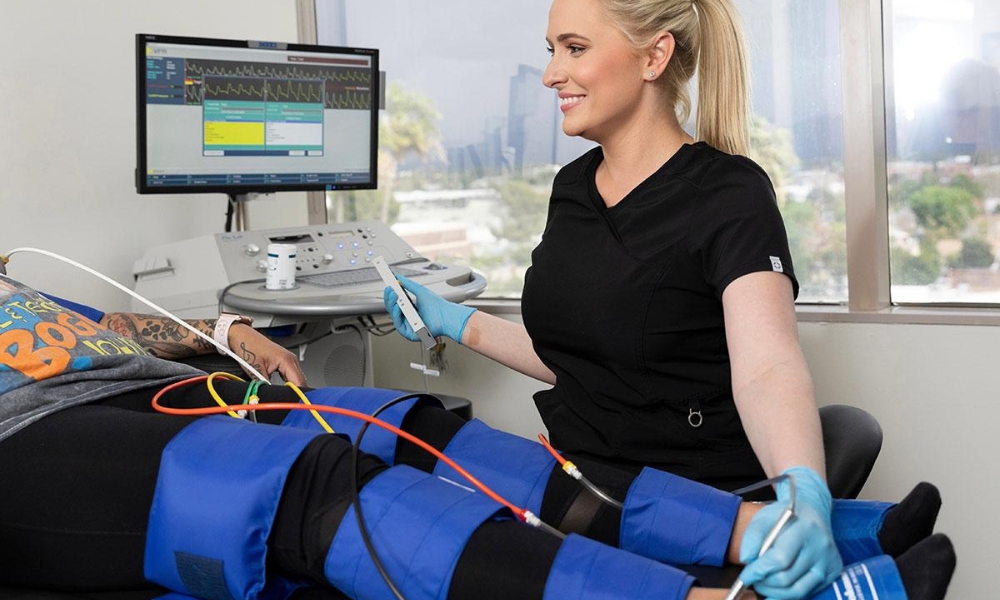
An ankle-brachial index (ABI) compares blood pressure measured at the ankle with blood pressure measured at the arm. The comparison can help identify reduced arterial blood flow and is commonly used when PAD is suspected.
The test uses blood-pressure cuffs and is generally straightforward. Your healthcare professional interprets the result alongside your symptoms and examination findings.
Vascular Ultrasound
A vascular ultrasound uses sound waves to examine blood flow through blood vessels. Depending on the type of study, it can help evaluate arteries or veins.
For example, vascular ultrasound can be used to investigate suspected narrowing in an artery or evaluate blood flow when a venous problem is suspected.
Apex Heart & Vascular Center offers vascular ultrasound as part of its diagnostic services.
Other Cardiovascular Testing
Depending on your symptoms, your healthcare professional may recommend additional cardiovascular testing. The goal is to understand whether the leg symptoms are part of a broader vascular or cardiovascular problem.
Testing should be selected based on the individual rather than performed simply because someone has one symptom such as cold feet or leg swelling.
How Are Circulation Problems in the Legs Treated?
Treatment depends on whether the problem involves arteries, veins, a blood clot, or another condition.
Treating Arterial Circulation Problems
When PAD is diagnosed, treatment often focuses on improving cardiovascular health, controlling risk factors, improving walking ability, and reducing the risk of future complications.
Your healthcare professional may recommend an appropriate exercise program, management of blood pressure and cholesterol, diabetes control when applicable, smoking cessation, and medications based on your individual risk profile.
Some people with more significant arterial disease may require procedures to improve blood flow. The appropriate treatment depends on the location and severity of the blockage and the person’s overall health.
Treating Venous Circulation Problems
Venous conditions may be managed with measures designed to improve the return of blood from the legs, along with treatment of the underlying vein problem.
For people with symptomatic varicose veins or venous insufficiency, treatment options may include minimally invasive vein procedures when appropriate.
Apex Heart & Vascular Center provides treatment options for varicose veins, including endovenous procedures based on individual needs.
Treating a Blood Clot
A suspected DVT requires medical evaluation because treatment is different from routine management of chronic venous insufficiency. A healthcare professional may use imaging and other clinical information to determine whether a clot is present and what treatment is appropriate.
How Can You Protect Circulation in Your Legs?
There is no guaranteed way to prevent every circulation problem, but many of the factors that influence vascular health can be addressed.
Staying physically active within your healthcare professional’s recommendations can support cardiovascular health. Managing conditions such as high blood pressure, high cholesterol, and diabetes is also important.
If you smoke, quitting can have major benefits for your cardiovascular system because tobacco exposure damages blood vessels and increases the risk of vascular disease.
It is also worth paying attention to changes in your walking ability. If you suddenly cannot walk as far as you used to because of leg discomfort, do not automatically assume that you are simply getting older or becoming less fit.
Your legs can sometimes provide an early warning that something is changing in your vascular health.
Can Walking Improve Poor Circulation?
For some people with PAD, a medically appropriate walking program can become an important part of treatment. Regular, structured activity can help improve functional walking ability and cardiovascular health.
However, people with unexplained leg pain should not assume that more exercise is always the answer. Severe pain, sudden symptoms, significant weakness, or signs of acute circulation problems require medical evaluation first.
If your symptoms consistently appear during walking, tell your healthcare professional exactly how far you can walk before they begin. That information can help determine whether vascular testing may be appropriate.
What Should I Track Before a Circulation Appointment?
A simple symptom record can be surprisingly useful.
Write down when the symptoms started, whether they affect one or both legs, and what the sensation feels like. Note whether you experience aching, cramping, heaviness, swelling, numbness, tingling, coldness, or weakness.
If walking triggers symptoms, record approximately how far you can walk before they appear. Also note whether the symptoms improve when you stop, sit, elevate your legs, or change position.
Pay attention to visible changes such as swelling, unusual skin color, wounds, or differences between your two feet.
These observations can help your healthcare professional build a more complete picture of what is happening.
Vascular Care in Houston, Tomball, and Cypress
If you are experiencing persistent leg pain, swelling, cold feet, or other symptoms that make you wonder about circulation, professional evaluation can help identify the cause.
Apex Heart & Vascular Center provides cardiovascular and vascular care at locations serving Houston, Tomball, and Cypress, Texas.
The practice evaluates vascular symptoms including leg pain and claudication, leg swelling, and other circulation concerns. Diagnostic services include vascular ultrasound and cardiovascular testing when clinically appropriate.
Because leg symptoms can have several causes, the right evaluation depends on your individual symptoms, medical history, cardiovascular risk factors, and physical examination.
Concerned About Poor Circulation?
Persistent leg pain, swelling, cold feet, or changes in your walking ability deserve attention. Apex Heart & Vascular Center can evaluate vascular and cardiovascular concerns and determine which diagnostic tests may be appropriate.
Frequently Asked Questions About Poor Circulation in the Legs
What are the first signs of poor circulation in the legs?
Early signs can vary depending on whether the problem involves arteries or veins. Arterial circulation problems may cause leg fatigue, cramping, aching during walking, cold feet, or reduced walking ability. Venous problems may cause ankle swelling, heaviness, aching, or discomfort after prolonged standing.
These symptoms are not specific to circulation problems, so persistent or worsening symptoms should be evaluated rather than self-diagnosed.
How do you know if you have poor circulation in your legs?
There is no single symptom that confirms poor circulation. A healthcare professional may look for patterns such as walking-related leg pain, temperature differences, abnormal pulses, swelling, skin changes, or slow-healing wounds. Tests such as an ankle-brachial index or vascular ultrasound may be used when a vascular problem is suspected.
What does poor circulation in the legs feel like?
Poor circulation may feel like aching, cramping, heaviness, weakness, coldness, numbness, or unusual fatigue. With PAD, symptoms often appear during walking or exercise. Venous circulation problems may cause swelling and a heavy or aching feeling that becomes more noticeable after standing for long periods.
Does poor circulation cause cold feet?
It can, particularly when arterial blood flow to the feet is reduced. However, cold feet are common and do not automatically indicate vascular disease. Persistent coldness becomes more concerning when one foot is noticeably colder than the other or when coldness occurs with pain, numbness, weakness, or skin-color changes.
Can poor circulation cause swollen ankles?
Venous circulation problems can contribute to ankle and lower-leg swelling. When veins have difficulty returning blood toward the heart, fluid can accumulate in the tissues. However, swelling can also have heart, kidney, liver, medication-related, inflammatory, or clot-related causes.
Can poor circulation cause numbness and tingling?
Significantly reduced blood flow can contribute to abnormal sensations, but numbness and tingling can also result from nerve compression, diabetes-related nerve damage, and other neurological conditions. Sudden numbness associated with a cold, pale, blue, or weak leg requires urgent medical evaluation.
What does poor circulation look like on your legs?
Depending on the cause, circulation problems can be associated with pale or bluish skin, shiny or thin-looking skin, reduced hair growth, swelling, visible varicose veins, or changes in skin color around the ankles. A wound that heals unusually slowly can also be a warning sign of reduced blood flow.
Is poor circulation in one leg more serious?
A difference between the two legs can be important, particularly when the change is sudden. A suddenly cold, pale, blue, numb, or weak leg can indicate an acute arterial circulation problem. Sudden swelling in one leg can also require prompt evaluation for a possible blood clot.
What test is used to check blood circulation in the legs?
An ankle-brachial index, or ABI, is commonly used to evaluate arterial blood flow to the legs. Vascular ultrasound can also assess blood flow through arteries or veins. The appropriate test depends on the symptoms and suspected condition.
Can poor circulation in the legs be reversed?
The answer depends on the underlying cause. Some vascular risk factors can be managed, and treatment can improve symptoms and reduce the risk of complications. PAD may require lifestyle changes, medical management, structured exercise, or vascular procedures depending on its severity. Venous conditions have their own treatment options.
When should I see a doctor about poor circulation?
Make an appointment if you develop persistent leg pain, recurring walking-related cramping, unexplained swelling, cold feet, skin changes, slow-healing wounds, or a noticeable decline in how far you can walk. Seek urgent medical attention for sudden severe leg pain with a cold, pale, blue, numb, or weak leg, or for sudden one-sided swelling accompanied by significant symptoms.
Final Thoughts: Pay Attention to What Your Legs Are Telling You
When people say they have “poor circulation,” they may be describing very different symptoms. Some people experience calf pain after walking. Others notice swollen ankles, heavy legs, cold feet, numbness, or changes in their skin.
The pattern is often more informative than any single symptom.
Pain that repeatedly appears during walking and improves with rest can be a sign of reduced arterial blood flow. Swelling and heaviness that become worse after standing may point toward a venous problem. Numbness or tingling may involve the nerves rather than the blood vessels.
There is also no need to wait until symptoms become severe before discussing them with a healthcare professional. A gradual reduction in your walking ability, recurring leg discomfort, or a persistent change in the appearance or temperature of your feet can be worth investigating.
Testing such as an ABI or vascular ultrasound can help determine whether circulation is contributing to your symptoms. Once the cause is identified, your healthcare team can discuss the most appropriate treatment and ways to protect your cardiovascular health.
Most importantly, take sudden changes seriously. A suddenly cold, pale, blue, numb, or weak leg can represent a serious loss of blood flow. Sudden swelling and pain in one leg can also require urgent evaluation.
Your Leg Symptoms Deserve an Explanation
If persistent pain, swelling, cold feet, or changes in walking ability have made you concerned about circulation, a vascular evaluation can help determine what is causing your symptoms.
Medical Disclaimer: This article is intended for general educational purposes and does not replace professional medical advice, diagnosis, or treatment. Leg symptoms can have vascular, neurological, orthopedic, muscular, or other causes. A qualified healthcare professional should evaluate persistent, unexplained, or worsening symptoms. Seek urgent medical attention for sudden severe leg pain accompanied by a cold, pale, blue, numb, or weak leg, or for other potentially serious symptoms.